Best Artificial Turf for Dogs: What to Look For in 2026
Not all artificial turf is created equal when it comes to pet use. The wrong product leads to persistent odor, poor drainage, and rapid wear. Here is what actually matters when choosing artificial turf for a yard with dogs, from fiber type to infill to drainage ratings.
Why Pet-Specific Turf Matters
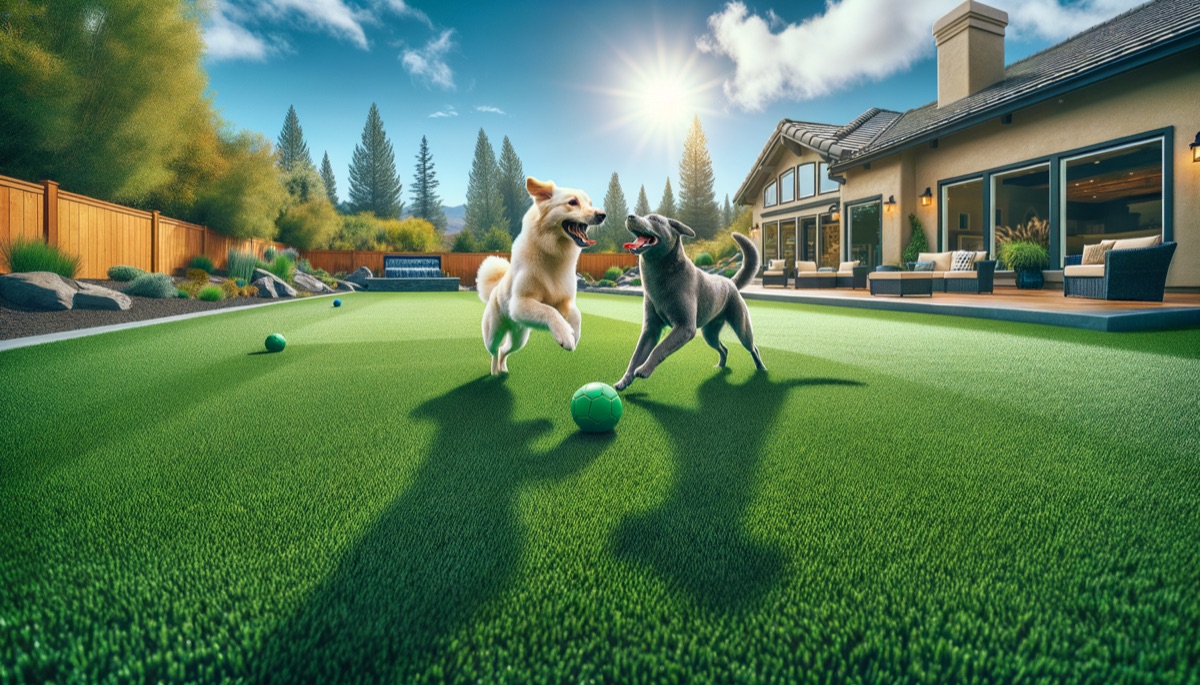
Standard landscape artificial turf is designed primarily for aesthetics. It looks great but is often poorly equipped to handle the demands that dogs place on it: frequent urination, digging, high-traffic running paths, and the associated cleaning that comes with pet ownership.
Pet-specific artificial turf addresses these demands with enhanced drainage that moves urine away faster, antimicrobial treatments that inhibit bacterial growth, durable fiber construction that resists wear from claws and running, and compatibility with odor-absorbing infill materials.
Choosing the wrong turf for a pet yard is a common and expensive mistake. Homeowners who install standard decorative turf in a dog area often end up replacing it within 3 to 5 years due to odor problems and fiber deterioration. Pet-specific products cost 15 to 25 percent more upfront but last significantly longer and require less intensive maintenance. Here is what to evaluate when making your selection.
Fiber Types: Polyethylene vs. Polypropylene vs. Nylon
The fiber material determines how the turf feels, how it holds up to wear, and how it responds to pet use. Each material has distinct advantages and tradeoffs:
Polyethylene (PE) - Recommended for Most Pet Owners
Feel: Soft and natural-looking, closely mimics the texture of real grass.
Durability: Good resistance to UV fading and moderate resistance to wear. Handles regular pet traffic well.
Pet performance: Does not absorb or retain urine. Drains cleanly when combined with proper infill and backing.
Best for: Residential yards with one to three dogs and moderate to heavy use.
Nylon - Best for High-Traffic and Large Dogs
Feel: Firmer and more resilient than polyethylene. Fibers bounce back quickly after being compressed.
Durability: The strongest of all three fiber types. Excellent resistance to wear, crushing, and heavy foot traffic.
Pet performance: Handles aggressive digging and running better than other fibers. Less prone to matting in high-traffic paths.
Best for: Yards with large or active dogs, multiple dogs, or commercial dog facilities like daycares and boarding operations.
Polypropylene (PP) - Not Recommended for Pet Areas
Feel: Least natural-looking and feeling of the three materials.
Durability: The weakest fiber type. Fades quickly in direct sunlight and mats down under moderate traffic.
Pet performance: Poor. Breaks down quickly under pet use and does not hold up to the repeated cleaning that pet turf requires. Polypropylene turf is designed for decorative use in low-traffic areas and should be avoided for any pet application.
Drainage Systems and Ratings
Drainage is arguably the most important factor for pet turf. Fast, complete drainage means urine passes through quickly rather than pooling in the infill where bacteria can break it down into ammonia.
What to Look For
- Drain rate of 30+ inches per hour. This is the standard benchmark. Premium pet turf products offer drain rates of 50 to 100 inches per hour through specialized backing systems.
- Perforated backing holes every 3 to 4 inches. Closer hole spacing means more drainage points and faster water clearance. Standard landscape turf often has holes every 6 inches, which is too sparse for pet use.
- Dual-layer backing. The best pet turf products use a dual-layer backing system: a primary backing that holds the fibers in place and a secondary drainage backing with a high-flow design. Some premium products feature a fully permeable backing that allows drainage across the entire surface, not just through punched holes.
If you already have turf with inadequate drainage, consult our guide on artificial turf drainage problems for solutions. For new installations, selecting turf with superior drainage from the start prevents most odor issues before they begin.
Antimicrobial Backing Technology
Antimicrobial treatments in the turf backing and fibers inhibit the growth of odor-causing bacteria. This does not eliminate the need for cleaning, but it significantly slows bacterial buildup between cleanings and reduces the intensity of pet odor.
Types of Antimicrobial Technology
- Built-in antimicrobial fibers. Some manufacturers infuse antimicrobial agents directly into the turf fiber during production. This provides permanent protection that does not wash away or wear off over the life of the turf.
- Antimicrobial backing coatings. A coating applied to the backing material that inhibits bacterial growth on the surface where urine and moisture accumulate. Effective, but may degrade over many years of exposure.
- Antimicrobial infill. Certain infill products include antimicrobial treatments or are naturally antimicrobial (like zeolite). This provides an additional layer of bacterial control within the infill layer.
For maximum odor control, look for turf that combines antimicrobial fibers with antimicrobial backing and pair it with zeolite-based infill. This triple-layer approach addresses bacterial growth at every level of the turf system.
Already Have Pet Turf That Needs Maintenance?
Get matched with a verified pet turf cleaning professional in your area. Free quotes, no obligation.
Get a Free QuoteInfill Options for Pet Turf
The infill material sits between the turf fibers, providing weight, stability, cushioning, and, in the case of pet turf, odor management. Choosing the right infill for a dog yard is a critical decision. For an in-depth comparison, see our complete guide to turf infill types.
Zeolite-Based Infill (Top Recommendation for Pets)
Zeolite is a naturally occurring volcanic mineral with a honeycomb-like molecular structure that absorbs and traps ammonia from pet urine. Products like ZeoFill are specifically processed for use as turf infill.
- Pros: Naturally absorbs ammonia, reduces odor between cleanings, non-toxic to pets, good drainage properties, does not heat up as much as rubber.
- Cons: More expensive than silica sand ($1.50 to $3.00 per square foot vs. $0.50 to $1.00 for sand), needs to be replaced or reactivated every 2 to 3 years as its absorption capacity fills up.
Silica Sand
The most common and affordable infill option. Provides good weight and stability with excellent drainage.
- Pros: Affordable, drains well, widely available, does not retain heat as much as rubber.
- Cons: No odor-absorbing properties, can compact over time reducing drainage, requires more frequent cleaning in pet areas to manage odor.
Crumb Rubber
Made from recycled tires, commonly used in sports field installations.
- Pros: Excellent cushioning, very durable, good fiber support.
- Cons: Retains significant heat in sunlight, does not absorb odors, small pieces can be ingested by digging dogs, has a distinct rubber smell. Not recommended for residential pet areas.
Envirofill and Coated Sand Products
Acrylic-coated sand products that combine the drainage of sand with antimicrobial properties.
- Pros: Antimicrobial coating inhibits bacteria, good drainage, resists compaction better than raw sand, lower heat retention than rubber.
- Cons: More expensive than raw sand, coating can wear off over time, not as effective at odor absorption as zeolite.
Pile Height and Density
Pile height (the length of the turf fibers) and density (how closely the fibers are spaced) affect both appearance and pet performance:
Recommended Pile Height for Pet Turf: 1.25 to 1.75 Inches
- Under 1 inch: Too short for a natural lawn look. Fibers this short offer poor cushioning and can feel scratchy. However, very short pile (putting green style) is easy to clean and drains quickly. Used primarily for dedicated dog potty pads, not full yards.
- 1.25 to 1.75 inches: The ideal range for pet yards. Provides a natural grass appearance, comfortable feel for dogs and humans, and is short enough for easy cleaning and fast drainage. Solid waste is easily spotted and removed. Urine passes through quickly without pooling on the surface.
- Over 2 inches: Looks lush but creates problems for pet owners. Taller fibers trap more debris, make solid waste harder to find and clean, slow drainage as urine takes longer to pass through, and mat down faster under foot traffic. Avoid pile heights above 2 inches for any area where dogs regularly play or relieve themselves.
Density Matters Too
Higher face weight (measured in ounces per square yard) means denser turf with more fibers per unit area. For pet turf, look for a face weight of at least 50 to 70 ounces per square yard. Higher density means the fibers support each other better and resist matting from foot traffic. It also means the turf retains its appearance longer under the wear that dogs inflict through running, playing, and digging.
Durability and Wear Ratings
Dogs are harder on artificial turf than human foot traffic alone. When evaluating durability, look for these specifications:
- UV stabilization. Essential for any turf exposed to direct sunlight. UV-stabilized fibers resist fading and degradation from sun exposure. Look for products that specify UV resistance ratings for your region. This is particularly important in sun-intense states like Arizona and Nevada.
- Tuft bind strength. This measures how securely the fibers are attached to the backing. Higher tuft bind means fibers are less likely to be pulled out by dog claws during running or digging. Look for a minimum tuft bind of 8 to 10 pounds for pet areas.
- Lisport testing. This standardized wear test simulates foot traffic and measures how well turf retains its appearance over time. A higher Lisport rating indicates better long-term durability. Quality pet turf should have a Lisport rating equivalent to at least 100,000 cycles.
- Warranty coverage. Most reputable pet turf products come with 8 to 15 year warranties. Check what the warranty covers, specifically whether it includes UV fading, fiber loss, and wear from pet use. Some warranties exclude pet-related damage, which is a red flag for products marketed as pet-friendly.
Top Brands for Pet Turf in 2026
Several manufacturers offer product lines specifically engineered for pet use. When evaluating brands, focus on the specifications outlined above rather than marketing claims alone. Here are the key features to look for in pet-specific product lines:
What Premium Pet Turf Lines Include
- Enhanced drainage backing. Pet-specific lines typically feature drainage rates of 50 to 100+ inches per hour compared to 25 to 35 inches per hour for standard landscape products. Some use fully permeable backing that drains across the entire surface.
- Built-in antimicrobial protection. Look for antimicrobial agents integrated into the fiber manufacturing process, not just surface-applied coatings that wear off.
- Shorter, denser pile. Pet product lines generally use 1.25 to 1.75 inch pile heights with higher face weights for easier cleaning and faster drainage.
- Polyethylene or nylon fibers. No quality pet turf line uses polypropylene as the primary fiber material.
- Pet-specific warranty. The warranty should explicitly cover pet use without exclusions for pet-related wear or odor.
Major manufacturers including ForeverLawn, SYNLawn, Bella Turf, PetGrass by Global Syn-Turf, and K9Grass all offer dedicated pet product lines. The best choice depends on your specific needs: budget, dog size, number of dogs, climate, and how the space will be used.
Regardless of brand, proper installation and ongoing maintenance determine long-term success more than the product itself. Even premium turf will develop odor and drainage problems without regular pet turf cleaning. Consult our pet turf care guide for a complete maintenance schedule.
Frequently Asked Questions
How long does pet-specific artificial turf last?
High-quality pet-specific artificial turf typically lasts 12 to 15 years with proper maintenance, and some premium products carry warranties of up to 15 years. The lifespan depends on several factors: the quality of the turf fibers, the amount of pet traffic, the climate, and how consistently the turf is maintained. UV-stabilized polyethylene fibers in hot climates like Arizona or Nevada will fade more slowly than untreated options. The biggest factor in longevity is maintenance. Turf that is regularly rinsed, brushed, and professionally cleaned will significantly outlast neglected installations.
Is artificial turf safe for dogs to eat or chew on?
Modern artificial turf fibers made from polyethylene are non-toxic and will not poison a dog that occasionally chews on them. However, ingesting turf fibers or infill material in significant quantities can cause gastrointestinal blockages, which may require veterinary attention. If your dog is a persistent chewer, address the behavior rather than relying on the turf being safe. Ensure your dog has appropriate chew toys, gets adequate exercise, and is not left unsupervised on the turf for extended periods. The infill material is a separate consideration. Zeolite and silica sand are generally non-toxic, while crumb rubber infill should be avoided for dogs that dig or mouth the turf surface.
Does artificial turf get too hot for dogs' paws?
Artificial turf can reach surface temperatures of 120 to 170 degrees Fahrenheit in direct sunlight during summer months, which is hot enough to burn dog paw pads. This is a critical consideration for pet owners in hot climates. Lighter-colored turf reflects more heat than darker shades. Some manufacturers offer heat-reflective technologies that reduce surface temperature by 15 to 20 percent. You can also mitigate heat with shade structures, periodic water misting, and by scheduling outdoor time for early morning or evening hours. If your dog spends significant time on the turf during peak sun hours, consider installing a shade sail or choosing a lighter turf color.
What is the best infill for artificial turf with dogs?
Zeolite-based infill, such as ZeoFill, is widely considered the best option for pet turf. Zeolite is a naturally occurring mineral that absorbs ammonia from pet urine, reducing odor between cleanings. It also absorbs moisture, helping to keep the turf surface drier. Silica sand is a budget-friendly alternative that provides good drainage and stability but does not offer odor-absorbing properties. Crumb rubber infill, commonly used on sports fields, is not recommended for pet areas because it retains heat, does not absorb odors, and small pieces can be ingested by dogs that dig. For a detailed comparison, see our guide on turf infill types.
How much does pet-friendly artificial turf cost to install?
Pet-friendly artificial turf with proper drainage, antimicrobial backing, and quality infill typically costs between $8 and $14 per square foot fully installed. This includes the turf material, sub-base preparation, drainage layer, infill, and labor. For a standard 500 square foot backyard, total installation costs range from $4,000 to $7,000. Premium pet-specific products with enhanced drainage systems and zeolite infill sit at the higher end of this range. While the upfront cost is significant, artificial turf eliminates ongoing lawn care expenses like watering, mowing, fertilizing, and pest treatment, which typically run $150 to $300 per month for natural grass in warm climates.
The Bottom Line
The best artificial turf for dogs in 2026 combines polyethylene or nylon fibers, a drainage rate of at least 30 inches per hour (50+ is ideal), antimicrobial backing, zeolite-based infill, and a pile height between 1.25 and 1.75 inches. This combination addresses the three main challenges of pet turf: odor control, durability, and easy cleaning.
Investing in pet-specific turf upfront saves money and frustration in the long run. Homeowners who install standard landscape turf in dog areas typically spend more on replacement and remediation within 3 to 5 years than they would have spent on a proper pet product from the start. Pair the right product with regular maintenance, including daily rinsing, weekly enzyme treatments, and quarterly professional cleaning, and your turf will look and smell great for well over a decade.