Artificial Turf Drainage Problems: Causes, Signs, and Fixes
Water pooling on your artificial turf after rain or a routine rinse is a clear sign of a drainage problem. Left unaddressed, poor drainage leads to odor, mold growth, and accelerated turf deterioration. Here is how to identify the cause and fix it.
How Artificial Turf Drainage Works
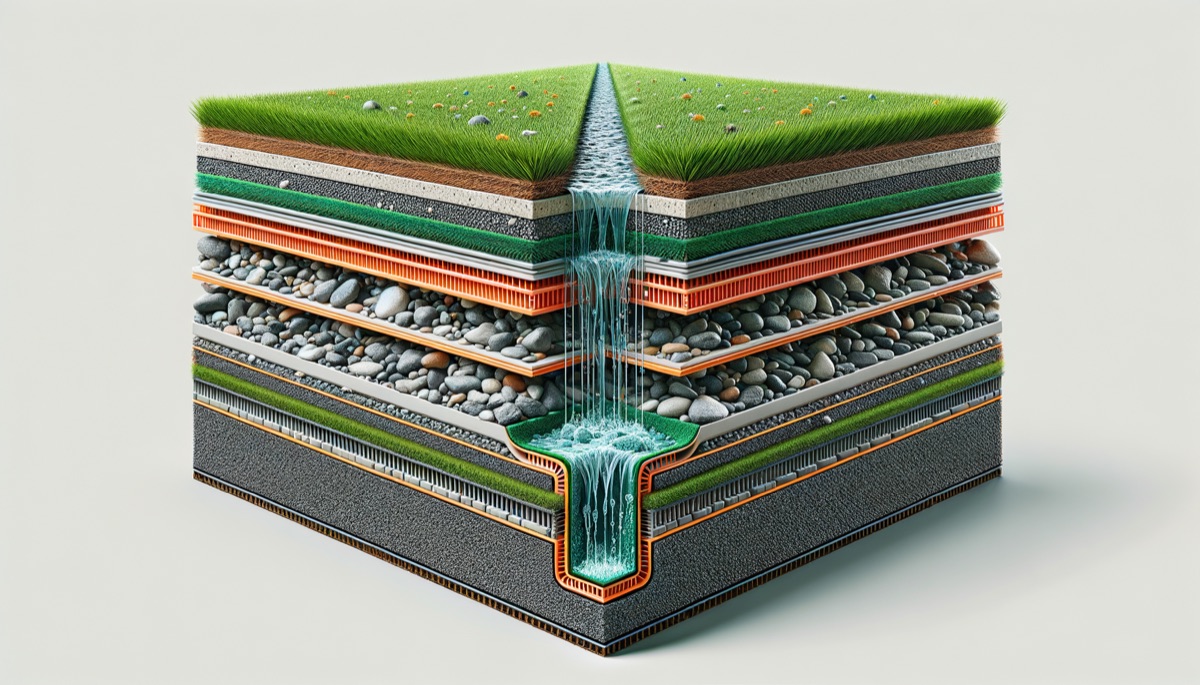
Artificial turf is designed to be permeable. Water passes through the system in three stages: first through the turf fibers and infill layer, then through perforated holes in the turf backing, and finally through a crushed aggregate sub-base into the ground below.
Most quality turf products have drainage holes punched into the backing every 4 to 6 inches, giving a drain rate of roughly 30 inches per hour. The sub-base, typically 3 to 4 inches of compacted crushed rock or decomposed granite, acts as the final drainage layer, allowing water to percolate into the native soil.
When any one of these three layers is compromised, drainage slows or stops entirely. The key to fixing the problem is identifying which layer has failed.
Signs of Poor Drainage
Recognizing drainage problems early prevents the secondary damage they cause. Watch for these warning signs:
- Standing water after rain. Any visible pooling that lasts more than 15 to 30 minutes after rain stops is abnormal for properly installed turf.
- Squishy or soggy feel underfoot. If the turf feels waterlogged when you walk on it hours after the last rain, water is being trapped in the infill or sub-base.
- Persistent musty or sour smell. Poor drainage creates the moisture conditions that breed bacteria and mold, producing a noticeable odor even without pet urine present.
- Visible mold or mildew. Green, black, or white patches on or between the turf fibers indicate sustained moisture. See our guide on mold and mildew prevention for more detail.
- Turf fibers matting down. Waterlogged infill weighs down turf fibers and prevents them from standing upright, creating flat, matted patches.
- Uneven surface or bumps. Water trapped beneath the turf can cause the sub-base to shift, creating visible bumps or depressions.
Cause: Compacted Infill
Compacted infill is the most common and most fixable cause of drainage failure. Over time, the infill granules (silica sand, crumb rubber, or other materials) get packed down by foot traffic, furniture weight, and natural settling. This creates a dense layer that blocks water from passing through to the backing.
High-traffic areas like pathways, play zones, and pet areas compact fastest. You can test for infill compaction by pressing your finger into the turf: if you cannot easily push through the infill to feel the backing, it is likely compacted.
Regular turf brushing and grooming is the primary defense against infill compaction. Monthly cross-brushing with a stiff-bristled broom keeps the infill loose and maintains drainage flow.
Cause: Blocked Drainage Holes
The drainage holes in the turf backing can become clogged by fine particles, organic debris, or mineral deposits. Leaves, dirt, pollen, and pet dander work their way down through the infill over time and accumulate at the backing level, blocking the holes that water needs to pass through.
This problem is most common in yards with nearby trees, flower beds, or areas that accumulate significant organic matter. It is also more prevalent in turf that has never been professionally deep-cleaned, as years of accumulated debris gradually seal off the drainage system.
Professional cleaning equipment can flush these holes clear by pushing water and cleaning solution through the backing at high pressure, restoring drainage without damaging the turf.
Cause: Improper Installation
Some drainage problems are baked in from the installation. The most common installation errors that affect drainage include:
- Insufficient slope. Artificial turf requires a minimum 1 to 2 percent slope to move water toward the drainage perimeter. Flat installations without proper grading trap water in low spots.
- Inadequate sub-base. A sub-base that is too thin, uses the wrong aggregate, or was not compacted properly during installation creates an unstable foundation that settles unevenly and blocks drainage paths.
- No weed barrier or wrong type. Some installers use non-permeable landscape fabric instead of proper weed barrier, effectively creating a waterproof layer that traps water above it.
- Poor seam construction. Improperly joined seams can channel water along their length rather than allowing it to drain vertically.
Installation-related drainage problems are the most difficult and expensive to fix because they often require partially or fully removing the turf to correct the underlying issue.
Cause: Sub-Base Problems
Even with a proper initial installation, sub-base problems can develop over years. The crushed aggregate base can shift, settle, or become contaminated with fine soil particles that migrate upward from the native ground below.
In areas with clay soil, the native ground underneath the sub-base may absorb water very slowly, causing the entire system to back up during heavy rain. This is particularly common in parts of California and Arizona where clay content in the soil is high.
Root intrusion from nearby trees can also disrupt the sub-base, creating channels that redirect water flow and cause uneven drainage across the surface.
Not Sure What Is Causing Your Drainage Problem?
Get a professional assessment from a verified local turf specialist. Free quotes, no obligation.
Get a Free QuoteDIY Drainage Fixes
Several drainage issues can be resolved without professional help:
Cross-Brush the Infill
Use a stiff-bristled push broom (nylon, not metal) to brush the turf against the grain of the fibers. Work in perpendicular passes across the problem area. This loosens compacted infill and restores its ability to pass water through. Do this monthly for high-traffic areas and quarterly for the rest of the turf.
Clear Surface Debris
Remove leaves, dirt, and organic matter regularly with a leaf blower or plastic rake. Debris left on the turf works its way into the infill and eventually clogs drainage holes. This is especially important in fall and spring when trees shed the most material.
Flush With a Garden Hose
For localized drainage problems, a thorough flushing with a garden hose can clear minor blockages in the infill and backing. Direct strong water flow at the problem area for several minutes and observe whether the water drains through. If it does not, the issue is likely deeper than a hose can reach.
Check the Perimeter
Ensure that the edges of your turf are not blocked by soil, mulch, or hardscape that has shifted. Water that drains through the turf needs somewhere to go at the edges. Clear any material that is damming the perimeter and preventing lateral drainage.
Professional Solutions
When DIY methods are not enough, professional services can address deeper drainage issues:
- Power brushing and infill decompaction. Professional power brooms agitate the entire infill layer far more effectively than hand brushing, breaking up compacted material and restoring permeability. This is often combined with infill replenishment to replace material that has broken down or been lost over time.
- Deep cleaning and hole clearing. Commercial turf cleaning equipment pushes high volumes of water and cleaning solution through the infill and backing, flushing out accumulated debris from drainage holes.
- Sub-base repair. For settling or grading issues, professionals can lift sections of turf, correct the sub-base grade, add or replace aggregate material, and re-lay the turf.
- Drainage system installation. In cases where the native soil has poor permeability, professionals can install supplementary drainage such as French drains or channel drains along the turf perimeter.
Professional infill decompaction and deep cleaning typically costs $0.50 to $0.85 per square foot. Sub-base repairs and drainage installations are significantly more, ranging from $1,500 to $5,000+ depending on the scope.
Frequently Asked Questions
How fast should artificial turf drain after rain?
Properly installed artificial turf should drain at a rate of approximately 30 inches per hour, which means standing water should disappear within minutes of the rain stopping, not hours. Most quality turf products have perforated backing that allows water to pass through every few inches. If water is still pooling 15 to 30 minutes after rain ends, that indicates a drainage problem. Factors like the sub-base material, slope grade, and infill compaction level all affect actual drain rates.
Can compacted infill cause drainage problems?
Yes, compacted infill is one of the most common causes of drainage failure. Over time, foot traffic, heavy furniture, and lack of regular brushing compress the infill granules into a dense layer that blocks water from passing through. Imagine packing wet sand into a bucket versus loosely pouring dry sand. The compacted version barely lets water through. Regular brushing with a stiff-bristled broom or power broom loosens the infill and restores drainage flow. For severely compacted areas, professional infill agitation or partial infill replacement may be needed.
Does artificial turf drainage get worse over time?
Drainage can degrade over time if the turf is not maintained. The three most common factors are infill compaction from foot traffic, organic debris accumulation that clogs drainage holes, and sub-base settling that changes the grade of the surface. However, with regular maintenance including monthly brushing, seasonal debris removal, and periodic professional cleaning, drainage performance can be maintained at or near original levels for the life of the turf, which is typically 15 to 20 years.
Will adding more infill fix drainage problems?
Adding more infill without addressing the underlying cause can actually make drainage worse. If the existing infill is already compacted, adding new material on top creates an even denser barrier. The correct approach is to first loosen or partially remove the existing compacted infill, then add fresh infill to the proper level. This is why professional infill replenishment services include agitation of the existing material before adding new infill. If the drainage problem is caused by a sub-base issue or blocked drainage holes, adding infill will have no effect.
Can I install a French drain under existing artificial turf?
Installing a French drain under existing turf is possible but involves significant work. The turf must be carefully removed, the sub-base partially excavated to install the drain pipe and gravel bed, and then everything reinstalled. This typically costs between $1,500 and $4,000 depending on the length of the drain and site conditions. Before committing to this, have a professional assess whether the drainage problem is actually a sub-base issue or something simpler like compacted infill or clogged drainage holes, which are far cheaper to fix.
The Bottom Line
Most artificial turf drainage problems are caused by compacted infill or blocked drainage holes, both of which are preventable with regular maintenance. Monthly brushing, seasonal debris removal, and annual professional cleaning keep drainage performing at or near original levels for the life of the turf.
If you are already experiencing drainage issues, start with the DIY fixes above. If standing water persists after brushing and flushing, the problem is likely deeper, either in the backing, sub-base, or original installation. A professional assessment can pinpoint the cause and give you an accurate repair estimate before the problem leads to more expensive secondary damage like mold or turf delamination.