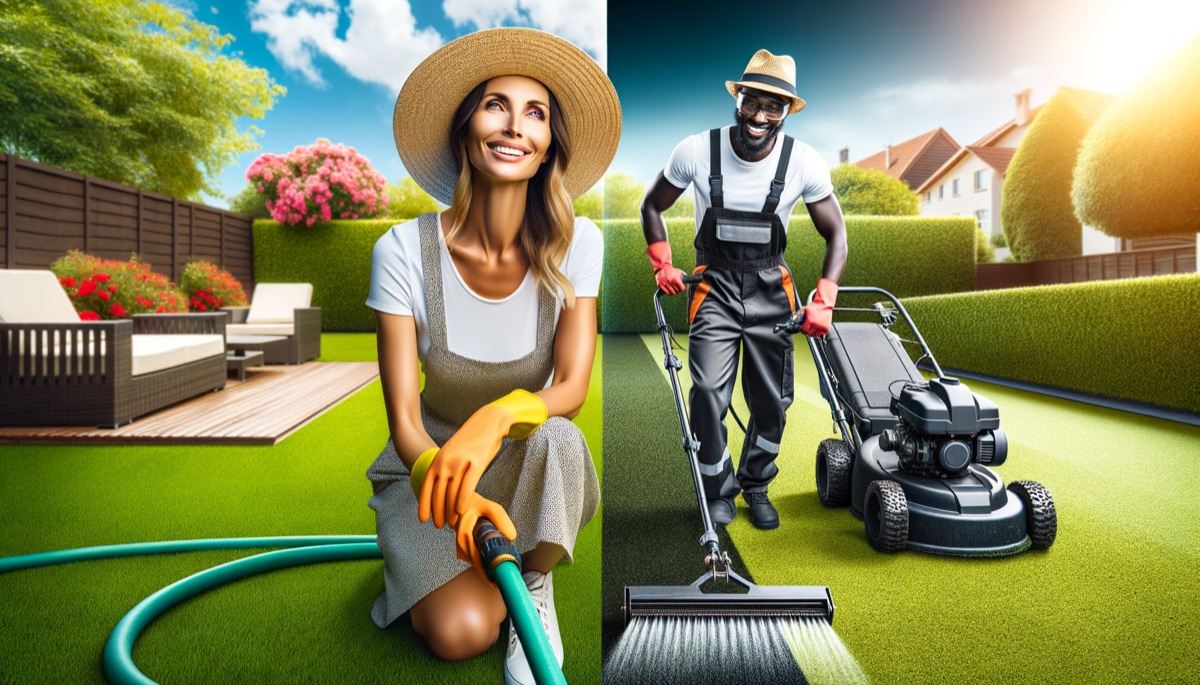
Every artificial turf owner faces this question sooner or later. The reality is that both DIY and professional cleaning have a role in keeping your turf in top condition. The key is understanding what each approach can and cannot do, so you know when to roll up your sleeves and when to call in the experts.
This guide compares DIY and professional turf cleaning across every metric that matters: cost, time, equipment, results, and risk. By the end, you will have a clear picture of which approach fits your situation and how to get the best value from both.
Head-to-Head Comparison
| Factor | DIY Cleaning | Professional Cleaning |
|---|---|---|
| Cost per Visit | $10 - $50 (supplies only) | $299 - $565 |
| Time Required | 1 - 3 hours your time | 1 - 3 hours (hands-free) |
| Equipment Needed | Broom, hose, mild soap | Commercial-grade machinery |
| Cleaning Depth | Surface-level only | Deep into infill and backing |
| Sanitizing | Limited or ineffective | Hospital-grade disinfection |
| Odor Removal | Temporary masking | Enzyme-based elimination |
| Risk of Damage | Moderate (wrong products/methods) | Very low (trained technicians) |
| Results Quality | Good for maintenance | Excellent, like-new restoration |
When DIY Cleaning Works
DIY maintenance is an essential part of artificial turf ownership. It is the most cost-effective way to keep your turf looking good between professional visits. Here are the situations where DIY cleaning makes the most sense.
Light, Routine Maintenance
Weekly debris removal, monthly rinsing, and regular brushing are perfectly suited for DIY. These tasks require no special equipment beyond a stiff broom, garden hose, and perhaps a leaf blower. They take 30 to 60 minutes and prevent buildup between professional visits.
Small Turf Areas
If your turf area is under 500 square feet, such as a small patio or balcony installation, DIY cleaning is practical and proportionally more cost-effective. The reduced scale makes manual cleaning manageable and the minimum service charges from professionals may not justify the cost for such small areas.
Regular Upkeep Between Pro Visits
The best turf maintenance strategy combines DIY and professional cleaning. Your monthly DIY routine keeps the surface clean and the fibers upright, which reduces the work needed during professional visits and can even extend the interval between them.
Immediate Spill Response
When spills happen, immediate action prevents stains from setting. You do not want to wait for a professional appointment to address a wine spill or pet accident. Having basic cleaning supplies on hand for quick response is essential for every turf owner.
When You Need a Professional
There are specific situations where DIY cleaning is not enough, and attempting it yourself can actually cause more harm than good. These are the times to call in a professional.
Deep Cleaning and Sanitizing
Consumer-grade products cannot penetrate deep into the infill layer where bacteria, mold spores, and allergens accumulate. Professional equipment uses high-pressure systems and commercial-grade antimicrobial solutions that reach every layer of the turf system, eliminating contaminants that household cleaning simply cannot touch.
Pet Odor and Urine Issues
Pet urine forms crystallized uric acid deep in the infill that no amount of household rinsing or vinegar solutions can break down. Professional turf cleaners use enzyme-based treatments specifically formulated to break the molecular bonds in uric acid crystals, permanently eliminating the odor source rather than temporarily masking it.
Large Areas (1,000+ sq ft)
Once your turf area exceeds 1,000 square feet, DIY deep cleaning becomes impractical. The physical effort, time investment, and inability to achieve uniform results across a large surface make professional service the clear winner. Pros clean a 1,500 sq ft area in about 90 minutes with consistent results across every square foot.
Stubborn Stains and Discoloration
Set-in stains from oil, paint, food dyes, rust, or mineral deposits require specific treatment products and techniques. Using the wrong approach can spread the stain, damage the fibers, or cause discoloration. Professionals identify the stain type and apply the appropriate treatment without risking damage to your turf.
Infill Redistribution and Replenishment
Over time, infill migrates away from high-traffic areas and compacts in others. Professional turf groomers use specialized equipment to redistribute existing infill evenly and add new infill where levels have dropped, restoring the turf's cushion, drainage, and natural appearance.
Cost Comparison Over Time
The upfront cost difference between DIY and professional cleaning is obvious, but the true cost picture emerges when you look at annual expenses and long-term turf health.
DIY Annual Cost
- Cleaning supplies$60 - $120/yr
- Broom/rake (one-time)$30 - $60
- Turf deodorizer$40 - $80/yr
- Your time (24+ hrs/yr)Priceless
- Total (supplies)$130 - $260/yr
Professional + DIY Annual Cost
- 2 pro cleanings/yr$298 - $760
- Basic DIY supplies$40 - $80/yr
- Your time (6 hrs/yr)Minimal
- Extended turf life+5 to 10 yrs
- Total$338 - $840/yr
While the professional approach costs more annually, it pays for itself through extended turf life. Consider that replacing artificial turf costs $10 to $18 per square foot installed. For a 1,000 sq ft area, that is $10,000 to $18,000. If professional cleaning extends your turf life by even 5 years, you save thousands compared to DIY-only maintenance that leads to premature replacement.
Step-by-Step DIY Cleaning Guide
For your regular maintenance routine, follow these steps to clean your artificial turf effectively without professional equipment.
Remove Loose Debris
Start with a leaf blower or stiff-bristled broom to clear leaves, twigs, dirt, and other loose material. Work in one direction to avoid spreading debris around. For pet waste, pick up solids with a bag before starting.
Rinse the Entire Surface
Using a garden hose with a spray nozzle, thoroughly rinse the entire turf area. Use a sweeping motion and spend extra time on areas where pets relieve themselves. The goal is to flush dust, pollen, and light contaminants through the drainage system.
Spot Treat Problem Areas
Mix a small amount of mild dish soap (no bleach, no ammonia) with warm water. Apply to stained or soiled areas and gently blot with a clean cloth. For sticky residue, let the solution sit for 5 minutes before blotting. Never use a wire brush or aggressive scrubbing on turf fibers.
Cross-Brush the Fibers
Using a stiff-bristled push broom or specialized turf rake, brush the fibers against the grain in multiple directions. This lifts matted areas, distributes infill more evenly, and restores the turf's upright, natural appearance. Focus on high-traffic areas where fibers tend to lay flat.
Apply Turf Deodorizer (Optional)
If odor is a concern, apply a turf-safe deodorizing product according to the manufacturer's instructions. Avoid household air fresheners, perfumes, or baking soda in large quantities, which can clog drainage holes and attract moisture. Purpose-made turf deodorizers are formulated to work with synthetic fibers.
Inspect and Document
Walk the perimeter and check seams, edges, and any areas where the turf meets hardscape. Look for lifting, gaps, weed intrusion, or drainage issues. Take photos of any problems to share with your professional cleaner at the next visit so they can address them efficiently.
DIY Mistakes to Avoid
- X Never use bleach, ammonia, or harsh chemical cleaners on artificial turf. They damage fibers and kill beneficial drainage bacteria.
- X Do not use a pressure washer at close range. High-pressure water can dislodge infill, damage seams, and tear turf fibers.
- X Avoid metal rakes or wire brushes. They shred synthetic fibers and create permanent damage to the turf surface.
- X Do not place hot items (grills, fire pits, cigarettes) on or near the turf. Synthetic fibers melt at relatively low temperatures.
The Best Approach: Combine Both
The smartest artificial turf owners use a combined strategy. Monthly DIY maintenance handles the surface-level upkeep that keeps turf looking good day to day. Periodic professional cleaning addresses the deeper issues that household tools cannot reach: embedded bacteria, compacted infill, odor sources, and structural maintenance.
This approach maximizes the lifespan of your turf, maintains a healthy environment for your family and pets, and delivers the best return on your artificial turf investment. Think of it like car maintenance: you wash it yourself regularly, but you take it to a professional for oil changes, inspections, and repairs.