How to Remove Pet Odor from Artificial Turf: 5 Proven Methods
That stubborn pet odor coming from your artificial turf is not something you have to live with. Whether the smell is mild or overwhelming, these five methods will help you eliminate it for good, starting with what you can do right now.
Why Your Artificial Turf Smells Like Pet Urine
Pet odor on artificial turf comes from a specific chemical process. When your dog or cat urinates on the turf, the liquid passes through the fiber layer and settles into the infill material, typically silica sand or crumb rubber granules. Some urine also reaches the backing layer beneath the infill.
Bacteria in these layers feed on the urea in pet urine and produce ammonia as a byproduct. This ammonia is the primary source of the harsh smell. The process intensifies with heat, which is why turf odor becomes noticeably worse during warm months, particularly in sun-exposed areas of states like Arizona, Florida, and Nevada.
Understanding this process is important because it explains why surface-level cleaning often fails. The odor source is not on top of the turf. It is trapped in the layers below the surface, and each of the five methods below targets the problem at a different depth.
Method 1: Immediate Rinse Technique
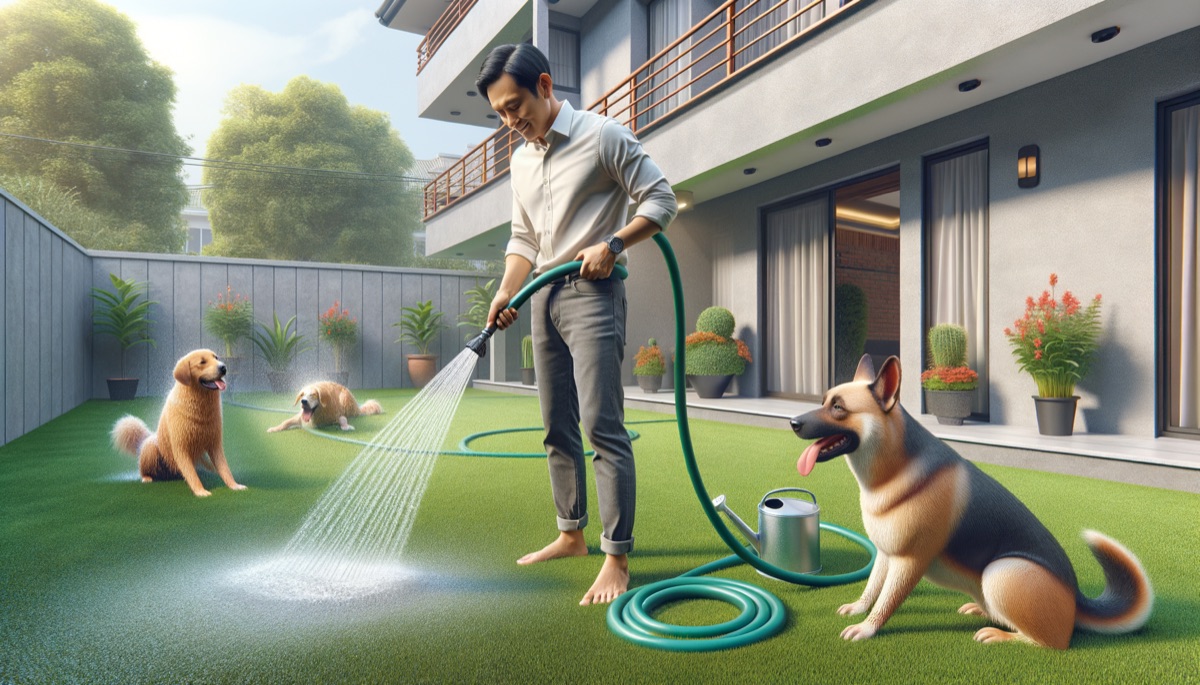
The fastest and simplest way to prevent odor buildup is rinsing the turf immediately after your pet urinates. This dilutes the urine before bacteria can break it down into ammonia.
Step-by-Step Rinse Process
- 1. Rinse within 5 minutes. Grab a garden hose and direct moderate water pressure at the urine spot. The sooner you rinse, the less urine penetrates the infill.
- 2. Soak the area for 30 to 60 seconds. Cover the spot plus about 6 inches beyond its edges to catch any spread.
- 3. Allow full drainage. Well-installed turf should drain completely within a few minutes. If water pools, that indicates a drainage issue that needs attention.
- 4. Repeat daily. If your pet uses the turf multiple times per day, a thorough rinse of all high-use areas each evening is sufficient.
Effectiveness: High for prevention, low for existing odor. Rinsing prevents new odor from forming but will not remove urine residue that has already accumulated in the infill. Pair this with one of the deeper methods below for established odor issues.
Method 2: Enzyme-Based Cleaners
Enzyme cleaners are the most effective DIY solution for pet odor removal. They contain live bacterial cultures and enzymes that break down uric acid crystals at a molecular level. Unlike other cleaning agents that mask or temporarily neutralize odor, enzyme cleaners permanently eliminate the compounds that produce it.
How to Apply Enzyme Cleaners
- 1. Pre-rinse the area. Remove any solid waste and rinse with plain water to clear loose debris from the turf fibers.
- 2. Apply the enzyme cleaner liberally. Use enough product to saturate through the turf fibers and soak into the infill. For concentrated formulas, dilute according to the product label.
- 3. Let it dwell for 15 to 20 minutes. The enzymes need contact time to break down uric acid. Do not rinse during this window.
- 4. Rinse thoroughly with a hose. Flush the area with water to wash away the broken-down compounds through the drainage layer.
- 5. Repeat weekly. Consistent enzyme treatments prevent odor from rebuilding between applications.
Effectiveness: Very high for moderate odor issues. Enzyme cleaners can penetrate the top portion of the infill layer, but for turf with months or years of untreated urine buildup, professional treatment may still be necessary to reach the deepest layers.
Method 3: Vinegar Solution
White vinegar is a natural acid that neutralizes the alkaline ammonia compounds in pet urine. While not as powerful as enzyme cleaners, it is inexpensive, pet-safe, and effective as a maintenance treatment.
Vinegar Solution Recipe and Application
- 1. Mix the solution. Combine equal parts white distilled vinegar and warm water in a spray bottle or garden sprayer. For stronger odor, use a 2:1 vinegar-to-water ratio.
- 2. Spray or pour over affected areas. Apply generously to fully cover the odor zone.
- 3. Let it sit for 10 to 15 minutes. The acetic acid needs time to react with and neutralize the ammonia.
- 4. Rinse with the garden hose. Flush away the solution and neutralized compounds.
- 5. Allow to air dry. The vinegar smell dissipates completely within 30 to 60 minutes.
Effectiveness: Moderate. Best for surface-level odor and as a between-treatments maintenance rinse. Vinegar cannot break down uric acid crystals the way enzymes can, so it works best in combination with Method 2 rather than as a standalone solution.
Method 4: Baking Soda Absorption
Baking soda (sodium bicarbonate) is a natural odor absorber that works by neutralizing both acidic and basic odor molecules on contact. It is safe for artificial turf fibers and can provide noticeable relief for mild to moderate pet odor.
Baking Soda Application Steps
- 1. Sprinkle liberally. Apply a generous layer of baking soda directly over the odor-affected areas. Use approximately one cup per 10 square feet.
- 2. Work it into the fibers. Use a stiff-bristled broom (not metal) to brush the baking soda down into the turf fibers and infill surface.
- 3. Let it sit for at least 30 minutes. For strong odor, leave it overnight for maximum absorption. Avoid applying before expected rain.
- 4. Rinse thoroughly. Use a garden hose to flush the baking soda completely through the drainage system.
Effectiveness: Low to moderate. Baking soda absorbs surface-level odor compounds but does not penetrate deeply into the infill. It works best as a supplemental treatment alongside enzyme cleaners, not as a primary odor removal method.
DIY Methods Not Cutting It?
Get matched with a verified turf deodorizing professional in your area. Free quotes, no obligation.
Get a Free QuoteMethod 5: Professional Deodorizing
When home methods are not enough, professional turf deodorizing is the definitive solution. Professional services use commercial-grade equipment and concentrated enzyme treatments that reach every layer of the turf system.
What Professional Deodorizing Includes
- High-volume flushing. Professionals use specialized equipment that pushes water and cleaning solution through the entire infill and backing system at a volume far beyond what a garden hose can achieve.
- Commercial enzyme treatments. Professional-grade enzyme concentrations are significantly stronger than consumer products, breaking down deeply embedded uric acid that has accumulated over months or years.
- Infill agitation. Specialized brushing equipment loosens compacted infill, allowing cleaning solutions to reach areas that have been sealed off by compressed material.
- Antimicrobial application. Many professionals apply a long-lasting antimicrobial treatment after cleaning that inhibits bacterial growth for weeks or months.
Professional pet turf cleaning and deodorizing typically costs between $0.65 and $1.10 per square foot, depending on the severity of the odor and the size of the area. For a 500 square foot yard, expect to pay roughly $325 to $550 per treatment.
Effectiveness: Highest of all methods. Professional treatment is the only approach that fully addresses urine buildup in every layer. Most pet owners find that quarterly professional treatments combined with weekly home maintenance keeps their turf permanently odor-free.
Recommended Products for Pet Odor Removal
Not all cleaning products work equally well on artificial turf. Here are the categories to look for when shopping:
What to Look For
- Enzyme-based outdoor formulas. Choose products labeled specifically for outdoor artificial turf or synthetic grass. These are formulated to handle the higher urine volumes typical of outdoor pet areas and are designed to work with turf infill materials.
- Bio-enzymatic concentrates. Concentrated formulas let you adjust the strength based on the severity of the odor. They are also more cost-effective for large areas.
- Zeolite-based infill. If you are replacing or topping off infill, zeolite products like ZeoFill naturally absorb ammonia and moisture on an ongoing basis, reducing odor between cleanings. Learn more in our pet turf care guide.
Products to Avoid
- Bleach. Discolors turf fibers and kills the beneficial bacteria in enzyme treatments.
- Ammonia-based cleaners. The scent mimics urine and encourages pets to mark the same spot.
- Scented masking sprays. They cover the smell temporarily but do nothing to remove the odor source, often making the situation worse when they wear off.
- Harsh chemical solvents. Acetone, paint thinner, and similar products can dissolve turf fiber materials.
Frequently Asked Questions
How long does pet odor last on artificial turf if untreated?
Pet odor can persist indefinitely if not addressed. Urine seeps into the infill and backing where bacteria continuously break it down into ammonia compounds. In warm climates, untreated odor intensifies significantly during summer months. Without any cleaning intervention, the smell compounds over time as new urine layers on top of old residue. Most homeowners notice the odor becoming unbearable within 2 to 4 weeks of zero maintenance in warm weather.
Can I use essential oils to mask pet odor on artificial turf?
Essential oils like eucalyptus or lavender may temporarily mask the smell, but they do not eliminate the odor source. The uric acid crystals and bacteria remain in the infill, and the scent of essential oils fades within hours. Some essential oils, particularly tea tree oil in concentrated form, can also be toxic to pets if they lick the turf. Instead of masking, focus on methods that break down the odor-causing compounds, such as enzyme cleaners or professional treatments.
Does rain help remove pet odor from artificial turf?
Rain provides some benefit by flushing surface-level contaminants and diluting urine on the turf surface. However, rain alone is not sufficient for turf with accumulated pet odor. The water volume and pressure from rainfall cannot penetrate deep enough into compacted infill to flush out embedded uric acid crystals. In fact, moisture from rain without adequate drainage can sometimes make odor worse temporarily by activating bacteria in the infill layer. Regular targeted rinsing with a hose is far more effective than relying on rainfall.
How often should I deodorize my artificial turf if I have pets?
For one dog, a weekly enzyme cleaner application combined with daily rinsing of high-use spots is typically sufficient. For two or more dogs, increase enzyme treatments to twice per week and rinse daily. Professional deodorizing should be scheduled every 3 to 4 months for single-dog households and every 2 to 3 months for multi-pet homes. During summer months, increase the frequency of all treatments by roughly 50 percent since heat accelerates bacterial activity and odor production.
Is pet odor on artificial turf a health concern?
Persistent pet odor on artificial turf indicates high levels of ammonia and bacteria, which can pose health concerns. Ammonia vapor can irritate the eyes, throat, and respiratory system, particularly for children who play close to the ground. Concentrated bacteria in the infill can also be problematic if children or pets come into direct contact with it. Maintaining a regular cleaning schedule eliminates these concerns entirely and keeps the turf safe for all family members.
The Bottom Line
Pet odor on artificial turf is a solvable problem. The most effective approach combines daily rinsing (Method 1) with weekly enzyme treatments (Method 2) and quarterly professional deodorizing (Method 5). Vinegar and baking soda work as supplemental treatments between deeper cleanings.
The single biggest mistake pet owners make is waiting too long to address the smell. Urine that has accumulated over months penetrates deep into the infill and backing, making it exponentially harder to remove. Start with consistent daily rinsing today, add weekly enzyme treatments, and schedule a professional cleaning to reset the baseline if your turf already has significant odor buildup.