Turf Infill Replenishment
Restore proper drainage, cushioning, and fiber support with professional infill replacement. The foundation your turf needs to perform.
Get a Free QuoteWhat Is Turf Infill Replenishment?
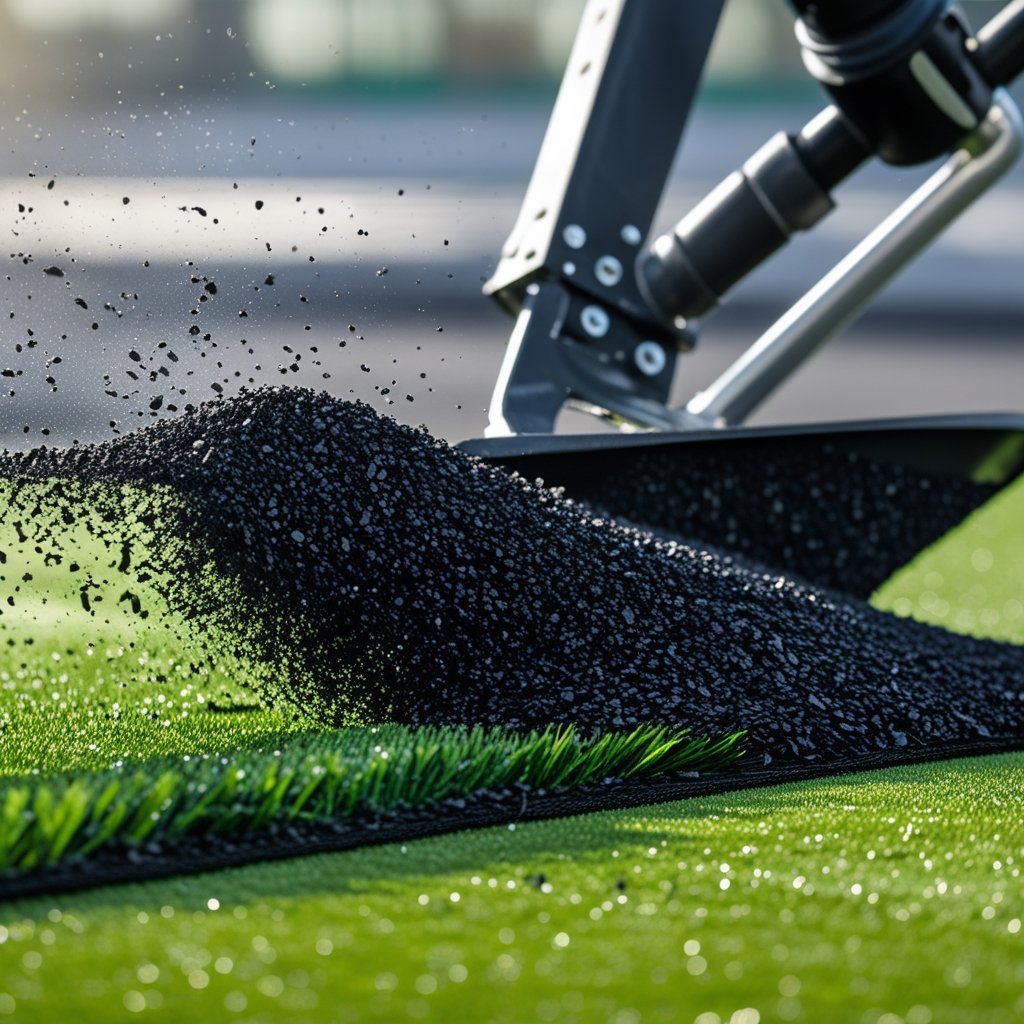
Infill is the granular material spread between the fibers of your artificial turf, and it is responsible for far more than most homeowners realize. Infill holds turf fibers upright, provides cushioning underfoot, adds ballast weight to prevent shifting, supports drainage, and protects the turf backing from UV exposure. Without adequate infill, your artificial grass cannot function as designed.
Over time, infill naturally depletes. Rain washes granules out through drainage holes. Wind carries away fine particles. Foot traffic, pet activity, and maintenance equipment displace infill from high-use areas into low-traffic zones, creating an uneven surface. Organic debris can contaminate infill, reducing its effectiveness and creating hygiene issues. Most artificial turf loses between 10% and 25% of its infill within the first 3 to 5 years of installation.
Professional infill replenishment measures current infill depth across your entire surface, removes contaminated or degraded infill where necessary, and applies fresh infill material to manufacturer-specified levels. The technician then brushes and levels the surface to ensure uniform distribution. This restores every function that infill provides, from visual appeal to structural stability, and significantly extends the usable life of your turf investment.
Why Infill Replenishment Matters
Infill is the invisible foundation of your artificial turf. When it depletes, everything else suffers.
Restores Natural Appearance
Proper infill keeps fibers standing tall and evenly distributed, giving your turf that lush, freshly installed look. Low infill exposes backing material and creates visible thin spots.
Improves Safety
Infill provides critical impact absorption, especially important for play areas and sports surfaces. Depleted infill increases the risk of injury from falls and reduces the comfortable feel underfoot.
Fixes Drainage Problems
Properly leveled infill maintains the channels that allow water to flow through your turf system. Depleted or compacted infill creates pooling, slow drainage, and the moisture buildup that causes odor and mold.
Reduces Surface Heat
Infill helps regulate turf temperature. Specialty infills like ZeoFill can reduce surface temperatures by up to 20 degrees compared to standard crumb rubber, making your turf more comfortable in summer.
Extends Turf Lifespan
Infill protects turf backing from direct UV exposure and distributes foot traffic stress evenly across fibers. Without it, backing degrades faster and fibers break down prematurely.
Prevents Wrinkles and Shifting
Infill adds ballast weight that keeps turf anchored to the sub-base. Without adequate weight, turf panels can shift, wrinkle, and separate at seams, especially during high winds.
Our Infill Replenishment Process
A precise, measured approach that restores your infill to optimal levels without over- or under-filling.
Infill Assessment
The technician measures current infill depth at multiple points across your turf using a depth gauge, comparing readings against manufacturer specifications. This creates a map of your infill levels, highlighting areas of depletion, migration, and compaction that need attention.
Old Infill Conditioning
Existing infill is decompacted using professional equipment that breaks up hardened layers without disturbing the turf backing. Contaminated or degraded infill in problem areas may be partially removed and replaced. This step ensures the new infill integrates properly with the existing material.
New Infill Application
Fresh infill material is spread across the turf using a drop spreader calibrated for your specific infill type and desired depth. Application is done in light passes to allow the material to settle between fibers naturally, rather than sitting on top of the turf surface.
Leveling and Verification
The entire surface is leveled to ensure uniform infill distribution. A power broom works the new infill deep into the fiber base while simultaneously lifting turf blades to their upright position. Final depth measurements confirm infill levels meet specifications across the entire surface.
Final Brushing and Inspection
A finishing pass with a grooming brush ensures all fibers are standing upright and the surface has a consistent, natural appearance. The technician conducts a final walkthrough and provides you with a maintenance schedule for maintaining optimal infill levels going forward.
Infill Replenishment Pricing
Pricing varies based on infill type, coverage area, and the amount of material needed.
Typical Residential Cost
$649 - $1,199
for a standard lawn (up to 400 sq ft)
Get an Exact Quote for Your TurfFactors That Affect Pricing
- Infill type selected: Basic silica sand is the most affordable option, while specialty infills like ZeoFill and Durafill cost more but offer enhanced performance.
- Amount of depletion: Heavily depleted turf needs more material, while minor top-ups require less labor and product.
- Turf area size: Larger areas benefit from volume pricing on both labor and materials.
- Old infill removal: If existing infill is contaminated and needs partial or full replacement, costs increase accordingly.
Frequently Asked Questions
Common questions about turf infill replenishment.
The most common infill types include silica sand, which is affordable and provides good drainage; crumb rubber, which offers excellent cushioning for sports applications; Durafill, an acrylic-coated sand that resists compaction and odor; ZeoFill, a zeolite-based infill that absorbs odors naturally; and organic infill options like coconut husk and cork for eco-conscious homeowners. Your technician will recommend the best infill type based on your turf use, climate, and budget.
Common signs include visible backing material between turf fibers, turf that feels hard or thin underfoot, fibers that lay flat and do not stand upright, poor drainage with water pooling on the surface, increased heat retention during warm weather, and turf that shifts or wrinkles when walked on. If your turf was installed more than 2 to 3 years ago and has never had infill added, it almost certainly needs replenishment regardless of visible symptoms.
Proper infill provides multiple critical functions: it holds turf fibers upright for a natural appearance, provides cushioning that makes the surface comfortable and safe for play, adds weight that keeps the turf anchored in place during wind, supports proper drainage by maintaining channels for water flow, protects turf backing from UV degradation, and helps regulate surface temperature. Without adequate infill, every aspect of turf performance suffers.
Most residential artificial turf benefits from infill replenishment every 2 to 4 years, depending on usage levels, weather conditions, and the type of infill installed. High-traffic areas, pet zones, and sports fields may need annual or even semi-annual top-ups. Your service provider can measure current infill depth and compare it against manufacturer specifications to determine exactly when replenishment is needed.
Related Services
Turf Brushing and Grooming
Grooming is the perfect complement to infill replenishment, ensuring fibers stand tall after new infill is applied.
Turf Sanitizing
Sanitize your turf before new infill goes in for a hygienically fresh foundation from top to bottom.
Weed Removal
Proper infill levels help prevent weed growth. Combine replenishment with weed treatment for comprehensive protection.
Ready to Transform Your Turf?
Get matched with trusted, local turf cleaning professionals. Free quotes, no obligation, no hassle.