Quick Answer
Residential artificial turf lasts 15 to 25 years with proper care. Most manufacturer warranties cover 8 to 15 years for defects in materials, while installer warranties cover workmanship for 2 to 5 years. Regular professional cleaning, using approved products, and maintaining infill levels are typically required to keep your warranty valid.
Artificial turf is a significant investment, typically costing $10 to $18 per square foot installed. For a standard 1,000 square foot yard, that is $10,000 to $18,000. With that kind of investment, understanding your warranty coverage and knowing how to maximize your turf's lifespan is not optional. It is essential.
This guide covers everything you need to know about artificial turf warranties, expected lifespans by use case, what voids coverage, and the specific maintenance steps that protect both your warranty and your investment over the long term.
How Long Does Artificial Turf Last?
The lifespan of artificial turf varies significantly depending on the application, quality of materials, and how well it is maintained. Here are realistic expectations by use case.
Residential Turf
Expected Lifespan
15 to 25 years
With regular maintenance
Without Maintenance
8 to 12 years
Accelerated degradation
Residential lawns, landscaping, and backyard installations see moderate foot traffic and benefit from the longest useful life. Quality turf from reputable manufacturers with proper UV stabilization can look great for two decades or more when cared for correctly.
Commercial Turf
Expected Lifespan
10 to 15 years
With professional maintenance program
Without Maintenance
5 to 8 years
Heavy wear without care
Commercial installations at hotels, restaurants, office parks, and retail spaces endure heavier daily traffic. A consistent professional maintenance program is critical to reaching the upper range. Many commercial turf owners invest in monthly or quarterly service contracts.
Sports and Athletic Turf
Expected Lifespan
8 to 12 years
With intensive maintenance
Without Maintenance
4 to 6 years
Rapid fiber and infill degradation
Athletic fields endure the most punishing conditions: cleated shoes, sliding, heavy equipment, and constant use. Even with aggressive maintenance programs, sports turf fields typically need replacement sooner than residential or commercial installations due to the extreme physical demands.
What Affects Turf Lifespan
Several factors determine whether your turf reaches the lower or upper end of its expected lifespan. Understanding these variables helps you take proactive steps to maximize your return on investment.
UV Exposure and Climate
Ultraviolet radiation is the single biggest enemy of artificial turf longevity. Desert climates like Arizona and Nevada expose turf to intense, year-round UV that breaks down polyethylene fibers faster than moderate climates. Turf in direct southern exposure can degrade 20 to 30 percent faster than shaded or northern-facing installations. Quality turf includes UV stabilizers in the fiber, but no additive can fully eliminate the effects of relentless desert sun. If you live in a high-UV area, expect lifespans closer to the lower end of the range unless you invest in more frequent maintenance and higher-grade products.
Foot Traffic Volume
The more use your turf gets, the faster it wears. A decorative front yard that rarely sees foot traffic can easily last 20 or more years. A backyard where kids play daily, dogs run, and parties happen regularly will show wear much sooner. Commercial walkways and sports fields see the fastest fiber matting and infill displacement. Higher traffic does not mean shorter lifespan is inevitable, but it does mean more frequent grooming and professional maintenance is necessary to keep fibers upright and infill distributed evenly.
Maintenance Frequency
This is the factor you have the most control over. Well-maintained turf can last twice as long as neglected turf. Regular professional cleaning, brushing, and infill replenishment prevent the compounding problems that accelerate wear. Neglected turf develops compacted infill, matted fibers, bacterial growth, and drainage issues that all feed on each other to shorten lifespan dramatically.
Installation Quality
Poor installation is an invisible lifespan killer. Inadequate base preparation leads to uneven settling, poor drainage, and wrinkles. Improper seaming creates weak points that separate over time. Insufficient edge securing allows turf to lift and peel. Incorrect infill depth causes premature fiber wear. A professional installation with proper base compaction, drainage grading, and seam bonding pays dividends over the entire life of the turf. Cutting corners on installation to save a few hundred dollars can cost thousands in early replacement.
Infill Type and Condition
Infill does more than cushion the turf. It supports fiber structure, aids drainage, and regulates surface temperature. Different infill materials degrade at different rates. Crumb rubber lasts longest but can compact over time. Silica sand is durable but migrates more easily. Organic infills like coconut or cork break down faster and need more frequent replenishment. Regardless of type, infill levels must be maintained. Low infill causes fibers to bend at the base rather than standing upright, accelerating permanent matting. Learn more about infill replenishment services.
Pet Use
Pet urine contains uric acid, which over time can break down the latex or polyurethane backing of artificial turf. The acidity also degrades certain infill types and promotes bacterial growth that further deteriorates the turf system. Dogs that consistently use the same spot create concentrated damage zones. Regular pet turf cleaning with enzyme-based treatments neutralizes uric acid before it causes permanent damage. Without treatment, heavy pet use can reduce turf lifespan by 5 to 8 years.
Understanding Turf Warranties
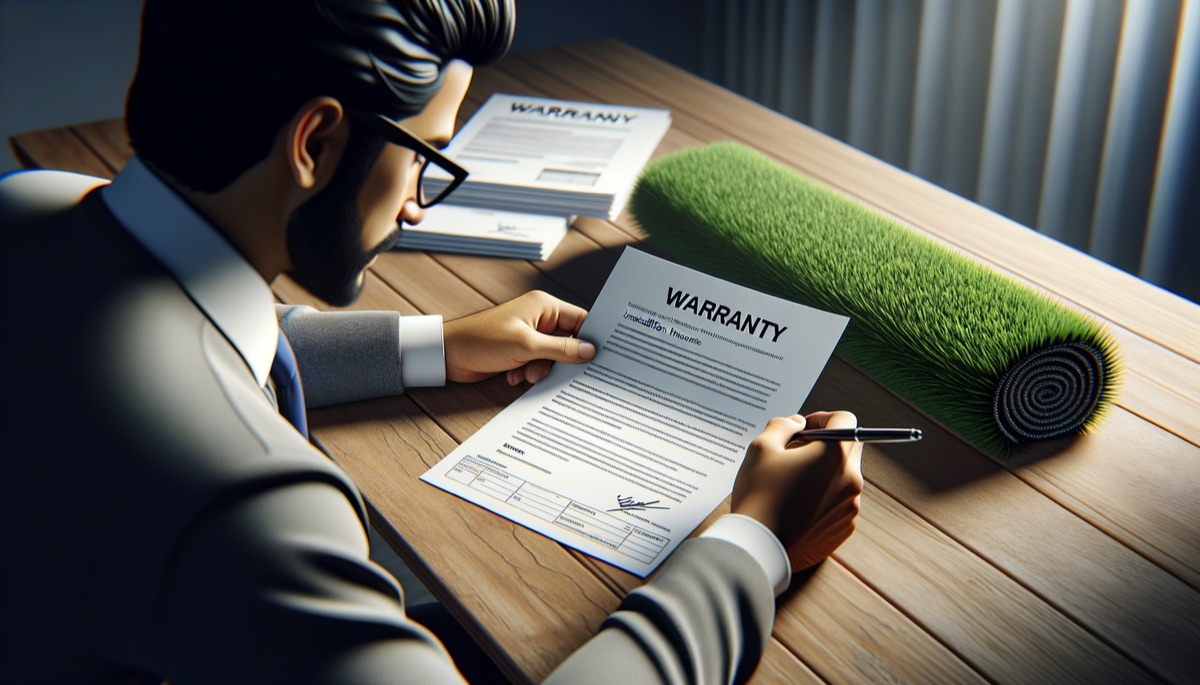
Artificial turf warranties can be confusing. There are typically two separate warranties that apply to your installation, each covering different things. Knowing what is and is not covered helps you make informed decisions about maintenance, repairs, and eventual replacement.
Manufacturer Warranties
Typical Coverage Period
8 to 15 years
Premium Products
Up to 25 years (limited)
Manufacturer warranties cover defects in materials and manufacturing. This typically includes excessive fiber loss beyond normal shedding, UV degradation beyond specified levels, color fading beyond the warranted threshold, and seam tape or backing failures caused by material defects.
Most manufacturer warranties are prorated, meaning coverage decreases over time. A 15-year warranty might cover 100 percent of material cost in years 1 through 5, 50 percent in years 6 through 10, and 25 percent in years 11 through 15. Read the fine print carefully to understand your actual coverage at any given point.
Installer Warranties
Typical Coverage Period
2 to 5 years
What It Covers
Workmanship and labor
Installer warranties cover issues caused by improper installation: seam separation, base settling, wrinkles, drainage problems due to incorrect grading, and edge lifting. These are separate from the manufacturer warranty and only as reliable as the company that issued them.
Always verify your installer's warranty terms in writing before the project starts. Ask how long they have been in business, whether the warranty is transferable if you sell the property, and what their process is for handling warranty claims.
What Voids a Warranty
These common actions and conditions can void your turf warranty entirely, leaving you responsible for the full cost of repairs or replacement.
- Improper chemicals: Using bleach, acetone, harsh solvents, or non-approved cleaning products on the turf surface. These break down fiber coatings and backing adhesives.
- Reflective windows: Low-E and double-pane windows can reflect and concentrate sunlight onto turf, generating temperatures exceeding 200 degrees Fahrenheit. This melts and deforms fibers. Most manufacturers explicitly exclude reflected heat damage from warranty coverage.
- Neglected maintenance: Failing to perform basic maintenance as outlined in the warranty terms. Many warranties require documented evidence of regular care, including professional cleaning.
- Unauthorized modifications: Cutting, patching, re-seaming, or modifying the turf yourself or through a non-authorized contractor. Any structural changes must be performed by the original installer or an authorized service provider.
- Improper infill: Adding non-approved infill material or failing to maintain minimum infill levels specified by the manufacturer.
What Warranties Typically Do NOT Cover
Even with perfect maintenance, certain conditions fall outside standard warranty coverage. Understanding these exclusions prevents unpleasant surprises.
- Normal wear and tear: Gradual fiber matting, minor color variation, and general aging from regular use are considered normal and not covered.
- Color fading: Some degree of color change over time is expected and most warranties allow for a specified percentage of fading before it becomes a covered defect.
- Pet damage: Staining, odor, or backing degradation caused by pet urine or waste is almost universally excluded from warranty coverage.
- Acts of nature: Flooding, fire, extreme weather events, falling trees, and other natural disasters are excluded.
- Reflected heat damage: Melting or distortion from concentrated sunlight reflected by windows, mirrors, or other surfaces is specifically excluded by most manufacturers.
- Cosmetic imperfections: Minor variations in fiber color, blade shape, or texture that do not affect performance are not considered defects.
How Professional Cleaning Protects Your Warranty
Professional turf cleaning is not just about aesthetics. It is one of the most practical steps you can take to maintain valid warranty coverage and extend the useful life of your investment. Here is how regular professional turf cleaning directly supports your warranty.
Maintenance Requirements in Warranty Terms
Most turf manufacturer warranties include language requiring "reasonable maintenance" or "regular care" as a condition of coverage. While definitions vary, this typically means periodic cleaning, debris removal, and infill management. If you file a claim and cannot demonstrate that you maintained the turf properly, the manufacturer can deny coverage. Professional cleaning services fulfill these requirements in a documented, verifiable way.
Documentation and Service Records
Professional turf cleaning companies provide invoices, service reports, and before-and-after assessments that create a paper trail of proper maintenance. This documentation is invaluable if you ever need to file a warranty claim. It proves you took reasonable steps to care for the turf and that any defect is a manufacturing or material issue rather than the result of neglect.
Maintaining Infill Levels
Infill displacement is a gradual process that most homeowners do not notice until it becomes a serious problem. Professional cleaners check infill levels at every visit and can recommend replenishment before low levels cause fiber damage. Since most warranties require maintaining proper infill depth, this proactive monitoring directly protects your coverage.
Using Approved Cleaning Products
Professional turf cleaners use products specifically formulated for synthetic grass that will not degrade fibers, backing, or infill. Using the wrong products, even common household cleaners, can void your warranty. A reputable turf cleaning company knows which products are safe and effective, eliminating the risk of accidentally damaging your turf with an unapproved chemical.
Signs Your Turf Is Aging
Knowing when your turf is showing age versus when it has a fixable maintenance issue helps you make smart decisions about repair versus replacement. Watch for these signs of genuine aging.
- Fiber matting that does not recover: When professional grooming and brushing can no longer restore fibers to an upright position, the polyethylene has lost its memory. This is a sign of UV degradation or excessive wear that no amount of maintenance can reverse.
- Permanent discoloration: Beyond normal sun fading, aging turf can develop a grey, washed-out appearance or uneven color patches that do not respond to cleaning. This indicates the UV stabilizers in the fiber have been depleted.
- Backing degradation: If you can lift the turf and see cracking, crumbling, or separation in the backing material, the structural integrity is compromised. This often starts around seams and edges where moisture and UV exposure are greatest.
- Drainage deterioration: As turf ages, backing perforations can become clogged, the base material beneath can shift, and the overall drainage system degrades. If water pools on the surface after rain despite professional cleaning and maintenance, the system may be nearing end of life.
- Infill breakdown: Over many years, infill material itself degrades. Crumb rubber breaks into fine dust, silica sand compacts into a hard layer, and organic infills decompose completely. When infill can no longer be effectively replenished or redistributed, the turf system is aging out.
Extending Your Turf's Lifespan
Taking these practical steps can add years to your turf's useful life, potentially saving you thousands in premature replacement costs. For a deeper dive into maintenance planning and costs, see our turf cleaning cost guide.
- Schedule regular professional cleaning: Every 6 to 12 months for residential turf, every 3 to 6 months for pet areas, and monthly for commercial or sports installations. Professional turf cleaning addresses deep contaminants that DIY methods cannot reach. Learn more about how often to clean artificial turf.
- Address reflected heat sources: If windows face your turf, install window film, screens, or awnings to prevent concentrated sunlight from melting fibers. This is the number one preventable cause of premature turf failure in residential settings.
- Brush and groom regularly: Cross-brushing fibers against the grain every month prevents permanent matting and redistributes infill. Use a stiff-bristled synthetic brush, never metal bristles which damage fibers.
- Maintain infill levels: Check infill depth annually and schedule professional replenishment when levels drop below the manufacturer's recommended depth. Low infill is one of the fastest paths to permanent fiber damage.
- Remove debris promptly: Leaves, organic material, and pet waste left on turf decompose and create conditions for bacterial growth, mold, and staining. Clear debris weekly using a leaf blower or plastic rake.
- Treat pet areas proactively: If dogs use the turf, rinse pet zones with water after each use and schedule professional pet turf cleaning every 3 to 6 months. Enzyme treatments neutralize uric acid before it damages backing material.
- Keep records of all maintenance: Document every professional service, DIY maintenance session, and any issues you notice. Photos, invoices, and a simple maintenance log protect your warranty and help professionals assess your turf's condition over time.
When to Replace vs Repair
Deciding between repair and replacement is one of the biggest financial decisions a turf owner faces. Here is a practical cost analysis to help you make the right call.
| Scenario | Estimated Cost | Recommendation |
|---|---|---|
| Small patch repair (under 50 sq ft) | $5 to $10 per sq ft | Repair |
| Seam repair or re-bonding | $200 to $600 | Repair |
| Infill replenishment (full yard) | $0.50 to $1.50 per sq ft | Repair / Maintain |
| Multiple worn areas (over 30% of surface) | Repairs approach replacement cost | Replace |
| Backing degradation (widespread) | Not repairable | Replace |
| Full replacement (1,000 sq ft) | $10,000 to $18,000 | When repair is not viable |
| Annual professional maintenance | $300 to $800 per year | Always worth it |
The Bottom Line
Repair when damage is localized to less than 30 percent of the surface, the backing is still structurally sound, and the rest of the turf is in good condition. Replace when widespread backing degradation exists, drainage has failed across the installation, or repair costs exceed 50 percent of replacement cost. In most cases, investing $300 to $800 per year in professional maintenance prevents the need for early replacement, saving you $10,000 or more over the life of the turf. See our complete cost guide for detailed pricing.
Frequently Asked Questions
No. In fact, most turf manufacturers require regular maintenance as a condition of their warranty. Professional cleaning with approved, turf-safe products actually helps protect your warranty by keeping documented records of proper care. The key is using a cleaning company that understands turf-approved methods and avoids harsh chemicals like bleach or acetone that could void your coverage.
Residential artificial turf typically lasts 15 to 25 years with proper maintenance. Commercial and sports turf lasts 8 to 15 years due to heavier use. The actual lifespan depends heavily on UV exposure, foot traffic, maintenance frequency, installation quality, and climate. Well-maintained turf in moderate climates can reach the upper end of those ranges, while neglected turf in harsh sun may need replacement in under 10 years.
Reflected heat from windows is one of the most common and least expected reasons. Low-E or double-pane windows can concentrate sunlight onto turf, melting fibers at temperatures exceeding 200 degrees Fahrenheit. Other common reasons include using unapproved chemicals like bleach or harsh solvents, failure to maintain proper infill levels, and unauthorized modifications or repairs. Always read your specific warranty terms carefully.
It depends on the extent of the damage. Small areas with worn fibers, minor seam separations, or localized pet damage are usually worth repairing at $5 to $10 per square foot. However, if more than 30 percent of the turf shows significant wear, if the backing is degrading, or if drainage has failed across the installation, full replacement at $10 to $18 per square foot is usually the better long-term investment. A professional assessment can help you decide.
Keep a maintenance log that includes dates of all professional cleanings, the company name, services performed, and any products used. Save all invoices and receipts. Many professional turf cleaning companies provide service reports that document the condition of your turf at each visit. Take photos annually to show the turf's condition over time. This documentation is essential if you ever need to file a warranty claim with the manufacturer.