Quick Answer
For most artificial turf stains, blot the spill immediately (never scrub), apply a mild dish soap and warm water solution, let it sit for 5 to 10 minutes, then rinse thoroughly with a garden hose. For organic stains like pet urine and blood, use an enzyme-based cleaner. For oil and grease, use a turf-safe degreaser. Always test any cleaner on a hidden area first, and never use bleach, acetone, or harsh solvents on artificial turf.
Artificial turf is durable and resilient, but it is not stain-proof. From pet accidents to backyard barbecue spills, stains happen. The good news is that most stains can be removed completely if you act quickly and use the right method. The bad news is that using the wrong product or technique can set a stain permanently or damage the turf fibers beyond repair.
This guide covers every common stain type you are likely to encounter on artificial turf. For each one, you will find what causes it, what to do immediately, the step-by-step cleaning method, which products to use, which products to avoid, and when it is time to call a professional stain removal service.
General Rules for Stain Removal on Artificial Turf
Before tackling any specific stain, commit these universal rules to memory. They apply to every stain type and will prevent the most common mistakes that cause permanent damage.
Blot, Never Scrub
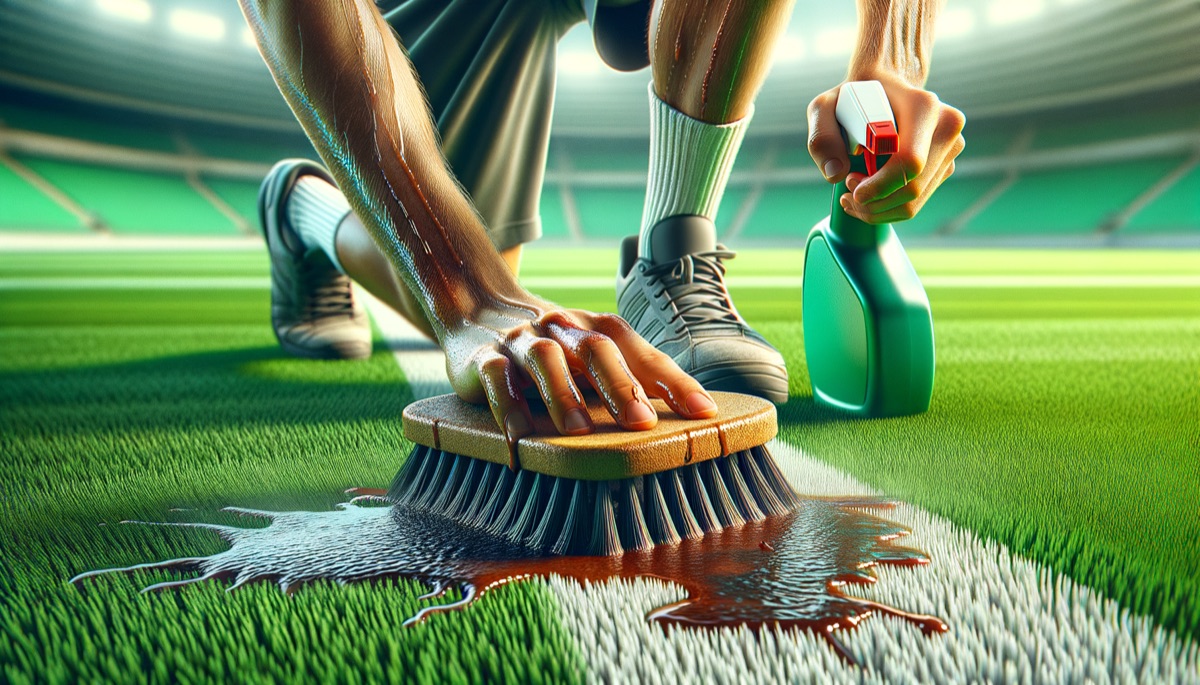
Scrubbing pushes the staining substance deeper into the turf fibers and infill, making removal harder and potentially spreading the stain to a larger area. Always blot with a clean white cloth or paper towel, pressing straight down and lifting. Work from the outer edge of the stain inward to prevent spreading.
Test First, Always
Before applying any cleaning product to a visible area, test it on a small, hidden section of turf. Wait at least 10 minutes and check for discoloration, fiber damage, or any adverse reaction. Even products labeled as "turf safe" can react differently depending on your specific turf brand and age.
Act Fast
Time is the enemy of stain removal. A fresh spill that takes 5 minutes to clean can become a permanent mark if left for days under direct sunlight. The heat from sun exposure bakes stains into synthetic fibers, making them exponentially harder to remove. Treat stains as soon as you notice them.
Rinse Thoroughly
After any stain treatment, flush the area with plenty of clean water. Cleaning product residue left in the turf attracts dirt, can damage fibers over time, and may create a sticky surface that collects new debris. A thorough rinse also ensures chemicals do not remain in the infill where pets or children play.
Use the Right Tools
Use a plastic spatula or blunt plastic knife to scrape solids. Use white cloths or paper towels for blotting to avoid transferring dye from colored rags. Use a soft-bristle brush (never wire bristle) if gentle agitation is needed. A garden hose with a spray nozzle is sufficient for rinsing in most cases.
Never Use These Products
Bleach, acetone, nail polish remover, undiluted vinegar, harsh drain cleaners, and industrial solvents should never touch artificial turf. These chemicals degrade turf fibers, strip UV protection, cause permanent discoloration, and can contaminate infill. When in doubt, stick to mild dish soap and water or a turf-specific cleaning product.
Pet Urine Stains
Pet Urine and Odor
What Causes It
Dog and cat urine contains uric acid, ammonia, and proteins that bind to turf fibers and infill. Over time, bacteria break down these compounds, producing the persistent ammonia smell that gets worse in warm weather. Repeated urination in the same spot concentrates the contamination.
Immediate Action
Rinse the area immediately with a garden hose. The sooner urine is diluted and flushed through the drainage system, the less it bonds to the fibers and infill. For fresh accidents, a thorough rinse may be all that is needed.
Cleaning Method
Apply an enzyme-based pet turf cleaner according to the product directions. Enzyme cleaners contain bacteria cultures that consume uric acid crystals at the molecular level, which is the only way to truly eliminate the odor source rather than just masking it. Let the enzyme solution dwell for the recommended time (usually 10 to 15 minutes), then rinse thoroughly. For heavy buildup, repeat the process after 24 hours.
Products to Use
Enzyme-based turf cleaners (BioTurf, TurFresh BioS+, Nature's Miracle), diluted mild dish soap for surface cleaning, and turf-specific deodorizing sprays.
Products to Avoid
Bleach, ammonia-based cleaners (they smell like more urine to pets, encouraging re-marking), vinegar (ineffective against uric acid crystals), and scented masking sprays that do not address the source.
When to Call a Pro
If odor persists after two enzyme treatments, if the turf has yellow discoloration from long-term accumulation, or if multiple pets use the turf daily. Professional pet turf cleaning services use commercial-grade enzyme systems, UV sanitizers, and high-volume flushing equipment that far exceed what consumer products can achieve.
Food and Drink Spills
Food and Drink Stains
What Causes It
Backyard gatherings are the number one source: barbecue grease, ketchup, mustard, soda, beer, wine, chocolate, and fruit juices. These substances contain sugars, fats, acids, and dyes that adhere to turf fibers. Greasy foods leave oily residue, while colored drinks can tint light-colored fibers.
Immediate Action
Remove solid food with a plastic spatula. Blot liquid spills with paper towels immediately. Do not let sugary drinks or sauces dry in direct sunlight, as they become much harder to remove once they caramelize or set into the fibers.
Cleaning Method
Mix a tablespoon of mild dish soap (Dawn or similar) with a quart of warm water. Apply to the stained area with a clean cloth, blotting gently. For greasy stains like barbecue sauce or cooking oil splatters, let the soapy solution sit for 10 minutes to break down the fats. Rinse with clean water from a garden hose. For stubborn colored stains from wine or fruit juice, a second application may be needed. For dried-on food, soften the residue with warm water first, then apply the soap solution.
Products to Use
Mild dish soap (unscented preferred), warm water, enzyme-based cleaners for protein-based food stains (chocolate, dairy), and turf-specific all-purpose cleaners.
Products to Avoid
Bleach, hydrogen peroxide (can fade turf color), abrasive scrubbing pads, and strong degreasers not rated for synthetic surfaces.
When to Call a Pro
When colored dye stains (red wine, berry juice, mustard) resist two soap-and-water treatments, or when grease has been ground into the infill from foot traffic. Professional turf stain removal services have specialized extraction equipment that pulls contaminants from deep within the infill layer.
Oil and Grease Stains
Oil, Grease, and Sunscreen
What Causes It
Motor oil from lawn equipment or vehicles parked nearby, cooking oil from outdoor kitchens and grills, sunscreen and tanning lotion tracked from pool areas, and hydraulic fluids from maintenance equipment. Oil-based stains are among the most stubborn because oil repels water and binds tightly to synthetic fibers.
Immediate Action
Blot as much oil as possible with paper towels or clean rags. Apply an absorbent material like baking soda, cornstarch, or cat litter to the stain and let it sit for 15 to 20 minutes to draw out the oil. Sweep up the absorbent material before proceeding with cleaning.
Cleaning Method
Apply a mild, turf-safe degreaser or a solution of dish soap and warm water. Dish soap is designed to cut through grease, which makes it effective on many oil stains. Apply the solution, let it dwell for 10 to 15 minutes, then blot with clean cloths. Repeat as needed, as oil stains often require multiple applications. Rinse thoroughly with a garden hose after each application. For motor oil or heavy grease, you may need a dedicated turf degreaser product.
Products to Use
Mild dish soap, turf-safe degreaser, baking soda or cornstarch (as initial absorbent), and mineral spirits in very small amounts for stubborn motor oil (test first, use sparingly, rinse immediately).
Products to Avoid
Gasoline, paint thinner, harsh industrial degreasers, acetone, and any petroleum-based solvent. These dissolve the synthetic fibers and can destroy large areas of turf around the original stain.
When to Call a Pro
Motor oil stains that have soaked into the infill, large grease spills from commercial equipment, or any oil stain that has been driven into the turf by foot traffic or vehicle tires. Professionals use commercial degreasing agents and extraction equipment that can pull oil from the infill without damaging the turf system.
Rust Stains
Rust and Iron Oxide
What Causes It
Metal patio furniture, iron planters, steel sprinkler heads, metal tools left on the turf, and even irrigation water with high iron content. Rust stains appear as orange or reddish-brown discoloration and can be some of the most difficult stains to remove because iron oxide bonds aggressively to synthetic materials.
Immediate Action
Remove the source of the rust immediately. Move the metal furniture, tool, or object off the turf. Blot any standing moisture. The longer iron-rich water sits on turf fibers, the deeper the stain penetrates.
Cleaning Method
Apply a rust remover specifically rated safe for synthetic turf or plastics. Follow the product directions carefully, as most require a dwell time of 5 to 15 minutes. Blot the area with a clean cloth, then rinse thoroughly. For light surface rust, a paste of baking soda and lemon juice can be effective. Apply the paste, let it sit for 10 minutes, then rinse. Multiple treatments may be required for deep-set rust stains.
Products to Use
Turf-safe or plastic-safe rust removers (check product labels for compatibility), oxalic acid-based cleaners in diluted form, baking soda and lemon juice paste for light stains, and white vinegar in diluted form (1 part vinegar to 4 parts water) for mild surface discoloration.
Products to Avoid
Naval jelly and strong acid-based rust removers designed for metal (they dissolve turf fibers), bleach (reacts with iron and creates worse staining), and undiluted muriatic acid.
When to Call a Pro
Rust stains older than a few weeks, large areas affected by sprinkler rust, or stains from heavy metal objects that compressed rust into the infill. Rust removal from turf is one of the more specialized services, and professional technicians have access to industrial-grade products that consumer options cannot match.
Tree Sap and Resin
Tree Sap, Resin, and Sticky Residue
What Causes It
Pine trees, maple trees, and many other species drip sap that lands on turf below. Tree resin is extremely sticky and hardens as it dries, bonding to fibers and trapping dirt, debris, and infill particles in a gummy mass. Fruit trees can also drop sticky residue from overripe or fallen fruit.
Immediate Action
Do not try to wipe fresh sap with a dry cloth, as this spreads it. If the sap is still wet, apply ice to harden it first. Hardened sap is easier to remove than wet, sticky sap. Place ice cubes in a plastic bag and hold against the sap for 5 to 10 minutes.
Cleaning Method
Once the sap is hardened (either naturally or with ice), carefully chip away the bulk of it with a plastic scraper. For the remaining residue, apply a small amount of isopropyl alcohol (rubbing alcohol) to a clean white cloth and dab gently at the stain. The alcohol dissolves the sap without damaging turf fibers when used in moderation. Work in small sections, using fresh areas of the cloth as it picks up sap. Follow up with a mild soap and water wash, then rinse the area thoroughly.
Products to Use
Isopropyl alcohol (70% concentration), ice for hardening, mild dish soap for follow-up cleaning, and commercial citrus-based adhesive removers labeled safe for plastics.
Products to Avoid
Acetone, nail polish remover, paint thinner, and Goo Gone (contains petroleum distillates that can damage some turf types). Avoid using excessive amounts of rubbing alcohol, as it can strip color from some turf fibers if left to soak.
When to Call a Pro
When sap has covered a large area (common under pine trees), when hardened sap has trapped significant debris in the turf fibers, or when sap has bonded with infill creating a hardened crust. Professionals can treat large areas efficiently without the tedious spot-by-spot process that DIY requires.
Paint Stains
Paint (Latex and Oil-Based)
What Causes It
Home improvement projects near turf areas, fence painting, deck staining, and accidental spills from paint cans or trays. Latex (water-based) paint and oil-based paint require completely different removal approaches. Spray paint overspray is another common source, especially near property boundaries.
Immediate Action
For wet latex paint, blot immediately with paper towels and flush with warm water. Latex paint is water-soluble when wet and can often be removed completely with just water if caught immediately. For wet oil-based paint, blot excess and do not add water (water does not dissolve oil-based paint). Time is critical for both types; once paint dries, removal becomes dramatically harder.
Cleaning Method
Latex paint (wet): Flush with warm water, apply mild dish soap, blot with clean cloths, and rinse. Repeat as needed. Latex paint (dried): Soften with warm water and dish soap. Gently work the softened paint with a soft brush. It may take several applications. Oil-based paint (wet): Blot excess, apply a small amount of mineral spirits to a cloth and dab carefully. Rinse with soap and water. Oil-based paint (dried): This is extremely difficult to remove without professional help. You can try mineral spirits on a small area, but dried oil paint often requires professional treatment.
Products to Use
Warm water and dish soap (latex), mineral spirits in small amounts (oil-based, test first), isopropyl alcohol for light paint splatters, and turf-safe all-purpose cleaner for follow-up.
Products to Avoid
Paint thinner in large quantities, acetone, turpentine, and any strong solvent that can dissolve synthetic fibers. Avoid wire brushes or abrasive tools to scrape dried paint, as they will destroy turf fibers.
When to Call a Pro
Dried oil-based paint, large paint spills, spray paint overspray covering a wide area, or any paint stain that has not responded to two gentle cleaning attempts. Paint removal is one of the top reasons homeowners contact professional stain removal services, and it is worth the investment to avoid damaging your turf with aggressive solvents.
Mud and Dirt Stains
Mud, Dirt, and Soil
What Causes It
Muddy shoes and pet paws tracking dirt onto the turf, soil runoff from adjacent garden beds or landscaping during rain, construction dust settling on the surface, and wind-blown dirt accumulating over time. While mud may seem like a simple stain, clay-rich soils can leave behind stubborn discoloration.
Immediate Action
Counterintuitively, the best immediate action for mud is to let it dry completely. Trying to clean wet mud smears it deeper into the fibers and makes the problem worse. Once dry, most mud brushes or vacuums off easily.
Cleaning Method
Allow the mud to dry fully. Once dry, use a stiff-bristled broom or turf rake to brush off the dried dirt, working against the grain of the fibers. For any remaining discoloration, rinse with a garden hose using a spray nozzle. If a stain persists after rinsing, apply a mild dish soap and water solution, let it sit for 5 minutes, then rinse again. For heavy clay deposits, a second brushing after rinsing helps dislodge particles trapped in the infill.
Products to Use
A stiff-bristled broom or turf rake, garden hose with spray nozzle, and mild dish soap for residual discoloration. That is usually all you need.
Products to Avoid
No special chemicals are needed for mud. Avoid pressure washing for routine mud removal, as it can displace infill unnecessarily.
When to Call a Pro
Heavy soil contamination from flooding or construction runoff that has compacted into the infill, or persistent red clay staining that does not respond to rinsing. A professional turf cleaning service can flush compacted dirt from the infill and restore proper drainage.
Chewing Gum
Chewing Gum and Sticky Candy
What Causes It
Dropped chewing gum, taffy, caramel, and other sticky candies. Gum is particularly problematic because it adheres to individual turf fibers and becomes more embedded the longer it sits, especially in warm weather when it softens and spreads.
Immediate Action
Do not try to pull warm gum off the turf, as this stretches it and spreads it to more fibers. Instead, apply ice immediately. Place ice cubes in a sealed plastic bag and hold against the gum for 10 to 15 minutes until it is completely hard and brittle.
Cleaning Method
Once the gum is frozen and brittle, use a plastic scraper or blunt knife to chip it off the turf fibers. Work carefully to avoid cutting or pulling fibers. Most of the gum should snap off cleanly when fully frozen. For any remaining residue, apply a small amount of isopropyl alcohol to a cloth and dab at the sticky spots. Follow up with a mild soap and water wash, then rinse. For large pieces deeply embedded in the fibers, you may need to repeat the freeze-and-chip process two or three times.
Products to Use
Ice cubes (in a bag), plastic scraper, isopropyl alcohol for residue, aerosol freeze sprays designed for gum removal, and mild dish soap for cleanup.
Products to Avoid
Peanut butter (a common home remedy that creates an oily mess on turf), WD-40 (petroleum-based and can stain), and adhesive removers containing harsh solvents.
When to Call a Pro
Gum that has been ground into the turf by foot traffic, gum that has melted and spread across a large area in hot weather, or multiple pieces of gum on a commercial or playground turf surface. Professionals handle these situations regularly and can remove gum without damaging fibers.
Mold and Mildew
Mold, Mildew, and Algae
What Causes It
Persistent moisture combined with shade and warm temperatures creates ideal conditions for mold and mildew growth. Poor drainage, organic debris left on the surface (leaves, food), heavy tree canopy blocking sunlight, and humid climates all contribute. Mold appears as dark patches, green or black discoloration, or a musty smell, while mildew is usually white or gray and powdery.
Immediate Action
Remove any organic debris from the affected area. Improve air circulation by trimming nearby bushes or branches that block airflow. If the area stays wet, address the drainage issue first, as no amount of cleaning will prevent mold if the underlying moisture problem persists.
Cleaning Method
Apply a turf-safe antimicrobial spray or a solution of equal parts water and hydrogen peroxide (3% concentration only). Spray the affected area generously, let it dwell for 15 to 20 minutes, then scrub gently with a soft-bristle brush. Rinse thoroughly. For recurring mold, apply a turf-specific antimicrobial treatment monthly as a preventive measure. Improving drainage and increasing sunlight exposure to the affected area is essential for long-term prevention.
Products to Use
Turf-safe antimicrobial sprays, hydrogen peroxide (3% solution, diluted further for sensitive turf), baking soda paste for light surface mildew, and commercial turf sanitizers with antimicrobial properties.
Products to Avoid
Bleach (damages fibers and kills beneficial bacteria in the infill), undiluted vinegar (can damage fibers in concentration), and fungicides intended for natural grass or garden plants (these may contain chemicals harmful to synthetic materials).
When to Call a Pro
Mold covering more than a few square feet, recurring mold that returns within weeks of cleaning, mold growing underneath the turf surface (visible through drainage holes), or black mold which poses health risks. Professional services can diagnose the root cause, address drainage issues, and apply commercial-grade antimicrobial treatments that provide longer-lasting protection.
Blood Stains
Blood and Bodily Fluids
What Causes It
Scraped knees on play turf, pet injuries, nosebleeds during sports activities, and minor cuts from outdoor activities. Blood is a protein-based stain that bonds to fibers when it dries and is set permanently by heat, making prompt and correct treatment essential.
Immediate Action
Flush the area with cold water immediately. Cold water is critical because hot or warm water coagulates the proteins in blood, setting the stain into the fibers. Blot with paper towels between rinses. Do not let blood dry on the turf if you can avoid it.
Cleaning Method
After the initial cold water rinse, apply a small amount of mild hand soap or dish soap mixed with cold water. Blot gently with a clean cloth. For dried blood, apply an enzyme-based cleaner (the same type used for pet stains), as the enzymes break down blood proteins effectively. Let the enzyme cleaner dwell for 15 minutes, then blot and rinse with cold water. For stubborn dried blood, a paste of baking soda and cold water applied for 10 minutes before rinsing can help lift the stain.
Products to Use
Cold water (most important), mild soap, enzyme-based cleaners, baking soda paste, and hydrogen peroxide (3%, tested first, as it can lighten some turf colors).
Products to Avoid
Hot water (sets the stain permanently), bleach, ammonia, and any heated cleaning method. Avoid aggressive scrubbing which spreads the blood into surrounding fibers.
When to Call a Pro
Dried blood stains that have been baked by sun exposure, large areas contaminated with blood (sports field injuries), or any situation where blood has soaked deep into the infill layer. Professionals also ensure proper sanitization of the area, which is important for health and safety on shared turf surfaces.
Quick Reference: Stain Removal at a Glance
Use this table as a fast reference for any stain you encounter. For detailed instructions, refer to the specific stain section above.
| Stain Type | First Step | Primary Cleaner | Difficulty |
|---|---|---|---|
| Pet Urine | Rinse with water | Enzyme cleaner | Moderate |
| Food and Drink | Blot and remove solids | Dish soap + warm water | Easy |
| Oil and Grease | Absorb with baking soda | Mild degreaser | Moderate |
| Rust | Remove metal source | Turf-safe rust remover | Hard |
| Tree Sap | Freeze with ice | Isopropyl alcohol | Moderate |
| Paint (Latex) | Flush with warm water | Dish soap + warm water | Easy (wet) / Hard (dried) |
| Paint (Oil-Based) | Blot excess | Mineral spirits (small amount) | Hard |
| Mud and Dirt | Let dry completely | Brush + rinse | Easy |
| Chewing Gum | Freeze with ice | Scrape + isopropyl alcohol | Easy |
| Mold and Mildew | Remove debris, improve airflow | Antimicrobial spray | Moderate |
| Blood | Flush with cold water | Mild soap + enzyme cleaner | Easy (fresh) / Hard (dried) |
Preventing Stains Before They Happen
Prevention is always easier and cheaper than removal. These practical steps reduce the likelihood of stains on your artificial turf.
- Place furniture pads under metal legs: Rubber or plastic pads under iron and steel furniture prevent rust transfer. Replace pads when they wear through.
- Use drip trays under grills and planters: Catch grease drippings and soil runoff before they reach the turf surface.
- Rinse pet areas daily: A quick hose-down of pet zones each evening dilutes urine before it can bond to fibers and cause staining or odor.
- Trim overhanging trees: Reducing sap, leaf litter, and bird droppings by trimming branches above turf areas prevents multiple stain types at once.
- Cover turf during painting projects: A tarp or drop cloth over nearby turf while painting fences, walls, or decks takes 2 minutes and prevents hours of stain removal later.
- Schedule regular professional maintenance: Routine professional turf cleaning catches stains early and treats minor discoloration before it becomes permanent.
Frequently Asked Questions
No. Bleach should never be used on artificial turf. It degrades the polyethylene and polypropylene fibers, causes permanent discoloration, and breaks down the UV stabilizers that protect your turf from sun damage. Instead, use a mild dish soap solution, enzyme-based cleaner, or a turf-specific cleaning product. If a stain resists gentle methods, contact a professional rather than reaching for harsh chemicals.
The sooner the better. Most stains are significantly easier to remove within the first 30 minutes. Once a stain dries, sets, or bakes into the fibers under sun exposure, it bonds more tightly and may require professional treatment. For liquid spills, blot immediately. For solid substances, scrape off the excess right away. Even if you cannot do a full cleaning, rinsing the area with water buys you time.
Pressure washing can help with certain stains, but it must be done carefully. Use a fan-tip nozzle, keep the pressure below 1,500 PSI, and maintain at least 12 inches of distance from the surface. Too much pressure displaces infill, damages fibers, and can separate seams. For most stains, a garden hose with a spray nozzle combined with the right cleaning solution is safer and equally effective. Reserve pressure washing for large areas with widespread contamination.
Yes, enzyme-based cleaners are generally safe for all types of artificial turf including nylon, polyethylene, and polypropylene fibers. Enzymes work by breaking down organic matter at the molecular level without harsh chemical reactions. They are the preferred solution for pet urine, blood, food residue, and other organic stains. Always check the product label to confirm it is safe for synthetic surfaces, and do a small spot test in an inconspicuous area before applying broadly.
Call a professional when a stain does not respond to two or three gentle cleaning attempts, when the stain covers a large area, when you are unsure what caused the stain, or when the stain involves substances like oil-based paint, industrial chemicals, or deep-set rust. You should also call a professional for recurring pet odor that persists after enzyme treatment, mold that keeps returning, or any stain that has been baked into the fibers by prolonged sun exposure. Aggressive DIY attempts on stubborn stains often cause more damage than the original stain.