Quick Answer
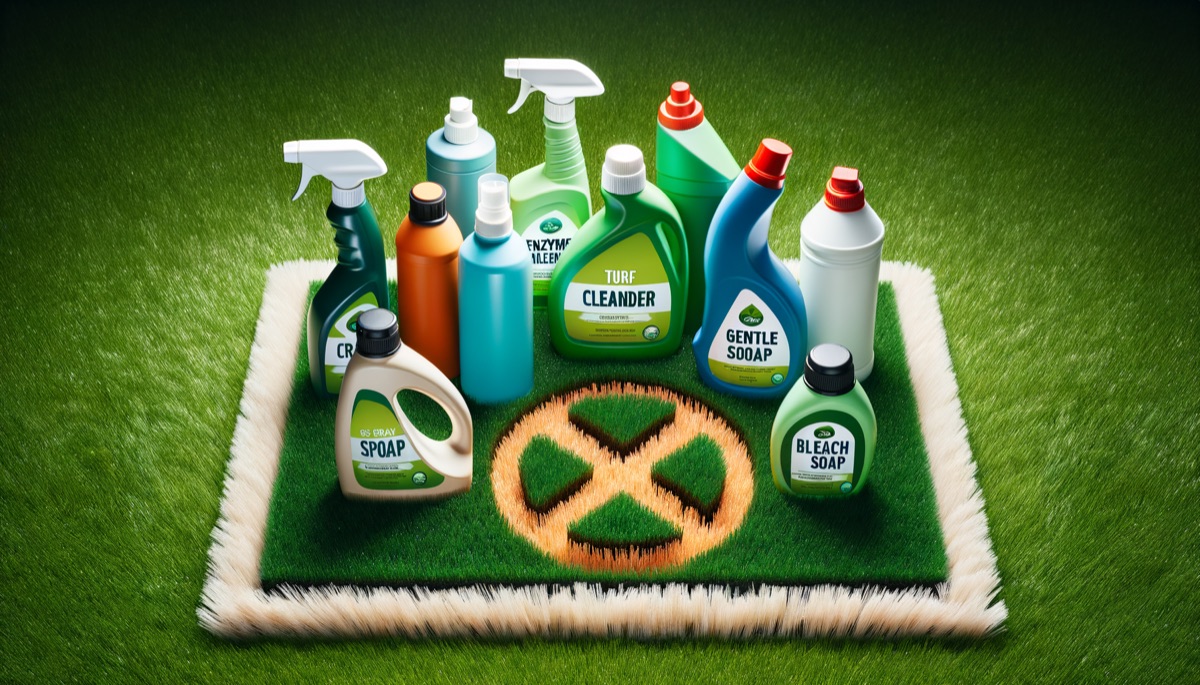
Safe products for artificial turf include enzyme-based cleaners, mild dish soap, diluted white vinegar, baking soda, turf-specific antimicrobial sprays, and diluted hydrogen peroxide.
Avoid bleach, ammonia-based cleaners, high-pressure washers, metal brushes, harsh chemical solvents (acetone, paint thinner), and glyphosate-based weed killers applied directly on turf.
Artificial turf is a significant investment, typically costing $5 to $20 per square foot installed. Protecting that investment means cleaning it with the right products. Unfortunately, many homeowners reach for whatever is under the kitchen sink without realizing that common household cleaners can permanently damage synthetic turf fibers, degrade the backing material, and create hazards for pets and children who use the surface daily.
This comprehensive guide covers every product category you need to know about. Whether you are tackling pet odors, general maintenance, or stubborn stains, you will find specific product recommendations, dilution ratios, and application methods that keep your turf looking great without causing harm.
Why Product Choice Matters
Using the wrong cleaning product on artificial turf is not just ineffective. It can cause real, lasting damage. Here is what is at stake when you make the wrong choice.
Fiber Damage and Discoloration
Harsh chemicals like bleach, acetone, and industrial solvents break down the polyethylene and polypropylene that turf fibers are made from. This causes permanent discoloration (yellowing, whitening, or fading), brittleness, and accelerated fiber loss. Once fibers are chemically damaged, the only fix is replacing the affected section.
Warranty Voiding
Most turf manufacturers include specific cleaning product restrictions in their warranty terms. Using bleach, harsh solvents, or non-approved chemicals can void your warranty entirely. Before using any cleaning product, check your turf manufacturer's maintenance guidelines. When in doubt, enzyme-based cleaners and mild soap are almost universally safe.
Harm to Pets and Children
Artificial turf is a contact surface. Dogs lay on it, children play on it, and both put their hands and paws in their mouths afterward. Chemical residue from harsh cleaners, especially bleach, ammonia, and solvent-based products, creates direct exposure risks. Skin irritation, respiratory issues, and ingestion of toxic residue are all documented concerns with improper product use.
Environmental Impact
Cleaning solutions applied to turf drain through the backing and into the soil below. Toxic chemicals contaminate groundwater, harm soil microorganisms, and can damage surrounding plants and landscaping. Choosing biodegradable, eco-friendly products protects your yard's entire ecosystem, not just the turf surface.
Safe Products for Artificial Turf
The following products are safe for synthetic turf fibers, infill material, and backing when used correctly. Each has specific strengths depending on your cleaning goal.
Enzyme-Based Cleaners
Best For
Pet areas, organic waste, odor elimination
Safety Rating
Excellent (pet, child, and eco-friendly)
Enzyme-based cleaners are the gold standard for artificial turf maintenance, especially in pet areas. They contain naturally occurring enzymes and beneficial bacteria that break down organic matter at the molecular level, including uric acid crystals from pet urine that water and soap cannot touch. Unlike chemical sanitizers that mask odors, enzyme cleaners eliminate the source of the smell by digesting the organic compounds causing it. Look for products specifically formulated for synthetic turf, and follow the manufacturer's dilution instructions. Most enzyme cleaners need 15 to 30 minutes of contact time to work effectively.
Professional pet turf cleaning uses commercial-grade enzyme treatments that are significantly more concentrated than retail products.
Mild Dish Soap Solutions
Best For
General cleaning, light stains, surface dirt
Dilution Ratio
1 tablespoon per gallon of warm water
A simple solution of mild, unscented dish soap and warm water handles most routine cleaning tasks on artificial turf. It effectively removes surface dirt, light food stains, and general grime without any risk to fibers or backing. Choose a dye-free, fragrance-free formula to minimize residue. Apply the solution with a soft-bristle brush or spray bottle, scrub gently, and rinse thoroughly with a garden hose. The key is thorough rinsing because soap residue left on the surface can attract dirt and create slippery spots.
White Vinegar Solutions
Best For
Natural deodorizing, mold prevention, light disinfecting
Dilution Ratio
1 part vinegar to 3 parts water
White vinegar (5% acidity) is a safe, natural option for deodorizing artificial turf and preventing mold and mildew growth. The acetic acid neutralizes mild odors and creates an environment that discourages fungal development. It works well as a routine maintenance rinse between professional cleanings. However, vinegar has limitations: it does not effectively break down uric acid crystals or kill bacteria at the concentrations safe for turf. For serious odor or sanitation concerns, pair vinegar maintenance with periodic professional deodorizing service.
Baking Soda
Best For
Surface odor absorption, spot deodorizing
Application
Sprinkle directly, wait 15 to 30 minutes, rinse
Baking soda (sodium bicarbonate) is a gentle, non-toxic odor absorber that is safe for all types of artificial turf. Sprinkle it directly on problem areas, let it sit for 15 to 30 minutes to absorb surface odors, then rinse thoroughly with water. It works by physically absorbing odor molecules rather than masking them with fragrance. Baking soda is particularly useful as a quick fix between deeper cleanings. It will not harm fibers, infill, or backing material, and it is completely safe around pets and children. For best results on larger areas, use a broadcast spreader for even distribution.
Turf-Specific Antimicrobial Sprays
Best For
Bacteria elimination, ongoing microbial protection
Safety Rating
Very good (check label for pet/child safety)
Several manufacturers produce antimicrobial sprays designed specifically for synthetic turf surfaces. These products kill bacteria, mold, and mildew on contact and often provide residual protection that lasts days or weeks. The advantage over household alternatives is that they are engineered to work with turf materials without causing degradation. Always choose products that are explicitly labeled as safe for synthetic turf, and verify pet and child safety claims on the label. Professional-grade antimicrobial treatments applied during turf sanitizing service provide longer-lasting protection than retail products.
Hydrogen Peroxide (Diluted)
Best For
Sanitizing, stain removal, mold treatment
Dilution Ratio
3% solution (standard pharmacy grade), 1:1 with water
Hydrogen peroxide at 3% concentration, diluted equally with water, provides effective sanitizing without the damage caused by bleach. It breaks down into water and oxygen, leaving no toxic residue. Hydrogen peroxide works well for spot-treating stains, sanitizing high-traffic areas, and addressing mold or mildew patches. Apply with a spray bottle, let it sit for 10 to 15 minutes, then rinse with water. Important: never use industrial-strength hydrogen peroxide (above 3%) on turf, as higher concentrations can bleach fibers. Always test on a small inconspicuous area first.
Products to AVOID on Artificial Turf
The following products are known to cause damage to synthetic turf materials, create safety hazards, or both. Do not use any of these on your artificial turf, regardless of how diluted they are.
Warning: These Products Will Damage Your Turf
- Bleach (sodium hypochlorite): Causes permanent discoloration of turf fibers, turning green to yellow or white. Degrades the latex or polyurethane backing that secures fibers. Residue is toxic to pets and children. Even heavily diluted bleach poses a risk because repeated use causes cumulative damage.
- Ammonia-based cleaners: The chemical structure of ammonia closely resembles urine, which confuses dogs and encourages them to mark the same spot repeatedly. Ammonia fumes are also toxic in enclosed or poorly ventilated areas and can irritate the respiratory systems of pets, children, and adults.
- Pressure washers on high settings: Excessive water pressure (above 1,200 PSI) displaces infill material, damages turf fibers, loosens seams, and can separate the turf from its backing. If you must use a pressure washer, keep it below 500 PSI with a wide fan-spray nozzle, and maintain at least 12 inches of distance from the surface.
- Metal brushes or rakes: Wire brushes, metal rakes, and steel-bristle brooms tear and pull out turf fibers. The damage is immediate and permanent. Always use plastic or nylon-bristle brushes and non-metal turf rakes designed for synthetic surfaces.
- Harsh chemical solvents (acetone, paint thinner, mineral spirits): These solvents dissolve the polyethylene and polypropylene that turf fibers are made from. Even brief contact can cause fibers to melt, warp, or disintegrate. They also attack the adhesive compounds used in seam construction.
- Weed killers with glyphosate (applied directly on turf): While glyphosate does not damage synthetic fibers directly, overspray and runoff from direct application can kill surrounding landscaping, contaminate soil beneath the turf, and leave chemical residue on a surface used by pets and children. Apply weed treatments only to the perimeter edges of turf, never across the surface.
Pet-Safe Cleaning Guide
If dogs or cats use your turf, every product you apply must be evaluated for pet safety. Animals have direct, prolonged contact with turf surfaces and are far more vulnerable to chemical exposure than humans. Here is what you need to know.
Safest Products for Pet Areas
Enzyme-based cleaners top the list because they are derived from natural biological processes and are non-toxic by design. Mild dish soap, white vinegar, and baking soda are also completely pet-safe when rinsed properly. Look for products with certifications like "USDA BioPreferred" or "EPA Safer Choice" for additional assurance. Avoid anything with essential oils (tea tree oil and eucalyptus oil are toxic to dogs and cats) even if marketed as "natural."
Drying Time Before Pet Access
Always allow the turf to dry completely before letting pets back on the surface. For soap and vinegar solutions, this takes 1 to 2 hours in warm, dry weather and up to 4 hours in cooler or humid conditions. Enzyme cleaners typically require 30 to 60 minutes of contact time plus 1 to 2 hours of drying. Hydrogen peroxide solutions need at least 2 hours. After professional cleaning, follow your service provider's guidance, typically 2 to 4 hours. If the surface still feels damp, it is not ready.
Organic and Natural Options
For pet owners who prefer strictly organic solutions, a combination of white vinegar rinses (weekly) and baking soda treatments (as needed for odor) provides basic maintenance without any synthetic chemicals. For deeper cleaning, choose enzyme products that list their ingredients transparently and carry organic or natural certifications. Be aware that purely organic methods have limitations: they do not provide the deep sanitization that commercial enzyme concentrates or professional pet turf cleaning delivers.
Dealing with Pet Urine Odor
Pet urine creates uric acid crystals that bond to turf fibers and infill. These crystals are not water-soluble, which is why rinsing alone never fully eliminates the smell. Enzyme cleaners are the only product category that effectively breaks down uric acid at the molecular level. For persistent odor in heavily used pet areas, see our guide on how to clean artificial grass dog urine for step-by-step instructions.
Child-Safe Cleaning Guide
Playground turf, backyard play areas, and any surface where children sit, crawl, or play require extra attention to product safety. Children are more susceptible to chemical exposure because of their lower body weight, developing immune systems, and tendency to put hands in their mouths after touching surfaces.
Playground Turf Considerations
Playground and school turf installations must meet stricter safety standards. Use only products that are explicitly labeled non-toxic and free of volatile organic compounds (VOCs). Enzyme-based cleaners, mild soap solutions, and baking soda are ideal choices. Avoid any product with strong fragrances, dyes, or chemical propellants. After cleaning, the turf must be completely dry and residue-free before children use the surface. Many schools and daycare facilities require Safety Data Sheets (SDS) for any products applied to play surfaces.
Residue Concerns
Even safe products leave residue if not rinsed properly. Soap film creates slippery surfaces that increase fall risk. Vinegar residue, while non-toxic, can irritate skin with prolonged contact. Enzyme cleaners generally leave no harmful residue once they finish their biological process, which is another reason they are the preferred choice for family turf areas. The rule is simple: after applying any product, rinse the treated area thoroughly with clean water until there are no suds, film, or scent remaining.
Non-Toxic Product Recommendations
For families with young children, stick to this priority order: (1) enzyme-based turf cleaners with third-party safety certifications, (2) baking soda for odor control, (3) mild dish soap diluted in water for stain removal, and (4) white vinegar diluted 1:3 with water for routine deodorizing. Avoid "antibacterial" household products, which often contain triclosan or quaternary ammonium compounds that leave persistent chemical residue on surfaces.
Eco-Friendly Cleaning Options
Every product applied to artificial turf eventually drains through the backing and into the soil. Choosing eco-friendly products protects groundwater, soil health, and surrounding plant life.
Biodegradable Products
Enzyme-based cleaners are inherently biodegradable because they use biological processes rather than synthetic chemicals. Look for products that carry biodegradability certifications (OECD 301 or equivalent). Vinegar and baking soda are naturally biodegradable. When choosing soap products, opt for those labeled "biodegradable" and "phosphate-free" to minimize environmental impact on the soil and water table beneath your turf.
Water Conservation During Cleaning
Turf cleaning does require water for rinsing, but you can minimize usage with smart practices. Use a spray bottle or pump sprayer for targeted application rather than flooding the entire surface. When rinsing, use a hose with an adjustable nozzle on a focused setting rather than an open flow. Clean in the cooler parts of the day (morning or evening) to reduce evaporation and allow the solution more contact time before drying. Professional cleaning services use low-volume, high-efficiency rinse systems that use significantly less water than DIY garden hose methods.
Environmental Impact Considerations
Artificial turf itself is an environmental consideration, so pairing it with eco-conscious maintenance makes sense. Avoid products that contain phosphates (which cause algae blooms in waterways), chlorine compounds (which form toxic byproducts in soil), or synthetic fragrances (which contain phthalates and other endocrine disruptors). Plant-derived surfactants and enzyme-based formulas provide effective cleaning power with minimal environmental footprint. If your turf borders a garden, pond, or natural area, eco-friendly products are not optional; they are essential.
What Professional Cleaners Use
Professional turf cleaning companies use products and equipment that are not available to consumers. Understanding what they use helps you appreciate why professional results are difficult to replicate with household products.
Commercial-Grade Enzyme Treatments
Professional enzyme concentrates are 5 to 10 times more potent than retail products. They contain higher concentrations of active enzymes and more diverse bacterial strains, allowing them to break down a wider range of organic contaminants more quickly and completely. These concentrates require precise dilution equipment and training to apply correctly. When applied by professionals, enzyme treatments penetrate deep into the infill layer where most odor-causing bacteria reside, something surface-applied retail products struggle to achieve.
Industrial Antimicrobial and Sanitizing Agents
Professional turf sanitizing services use hospital-grade antimicrobial agents that eliminate 99.9% of bacteria, viruses, and fungi on contact. These products provide residual protection that continues working for days or weeks after application. Many use stabilized chlorine dioxide or quaternary ammonium compounds at concentrations calibrated specifically for turf applications, ensuring effectiveness without fiber damage.
Specialized Equipment
Beyond products, professionals use equipment that makes a significant difference in results. Turf grooming machines simultaneously lift fibers, redistribute infill, and extract embedded debris. Low-pressure, high-volume rinse systems flush contaminants through the turf backing without displacing infill. Infrared thermometers identify hot spots indicating bacterial concentrations. And calibrated spray systems ensure even, consistent product application across the entire surface.
Professional Deodorizing Methods
Professional turf deodorizing goes far beyond masking smells. Technicians apply multi-stage treatments: first an enzyme treatment to break down organic matter, then an antimicrobial agent to eliminate bacteria, and finally a deodorizing agent that neutralizes remaining odor molecules. This layered approach eliminates odors at every level of the turf system, from the fiber surface down through the infill and into the backing.
Product Application Tips
Even safe products can be ineffective or cause issues if applied incorrectly. Follow these application guidelines to get the best results from your cleaning efforts.
| Product | Dilution Ratio | Contact Time |
|---|---|---|
| Enzyme cleaner | Per manufacturer (varies) | 15 to 30 minutes |
| Dish soap | 1 tbsp per gallon of water | 5 to 10 minutes |
| White vinegar | 1:3 with water | 10 to 15 minutes |
| Baking soda | Apply dry, directly to surface | 15 to 30 minutes |
| Hydrogen peroxide (3%) | 1:1 with water | 10 to 15 minutes |
| Antimicrobial spray | Per manufacturer (varies) | Per manufacturer |
Application Best Practices
- Test first: Always test any new product on a small, inconspicuous area of your turf and wait 24 hours to check for discoloration or damage before applying it to the full surface.
- Work in sections: Divide larger turf areas into manageable sections. Apply the product, allow the full contact time, then rinse thoroughly before moving to the next section. This prevents products from drying before they can work.
- Clean during cooler hours: Apply cleaning products in the morning or evening when temperatures are lower. Hot turf surfaces cause rapid evaporation, reducing product contact time and effectiveness. Products work best when they stay wet during their entire contact period.
- Use soft-bristle brushes: When scrubbing, use only nylon or polypropylene bristle brushes. Work in the direction of the turf grain, or alternate directions to lift matted fibers. Never scrub aggressively enough to pull fibers from the backing.
- Rinse thoroughly: This cannot be overstated. After every cleaning product application, rinse the area with clean water until all product residue is gone. Residue attracts dirt, creates slippery surfaces, and can be harmful to pets and children.
- Frequency matters: Light cleaning with mild products (soap, vinegar) can be done weekly or biweekly. Enzyme treatments are typically applied monthly or as needed for pet areas. Antimicrobial sprays can be used monthly for maintenance. Deep cleaning with multiple product stages is best left to professionals on a quarterly to annual basis.
Frequently Asked Questions
Yes, mild dish soap diluted in water is one of the safest cleaning solutions for artificial turf. Use about 1 tablespoon of unscented, dye-free dish soap per gallon of warm water. Avoid antibacterial dish soaps that contain triclosan, and always rinse the area thoroughly after cleaning to prevent slippery residue buildup.
White vinegar diluted with water (1 part vinegar to 3 parts water) is safe for artificial turf and works well as a natural deodorizer. It can help neutralize mild pet odors and inhibit mold growth. However, vinegar alone is not strong enough to sanitize turf or break down uric acid crystals from pet urine. For heavy odor or sanitation needs, enzyme-based cleaners or professional treatment are more effective.
Bleach (sodium hypochlorite) causes permanent discoloration of synthetic turf fibers, turning green fibers yellow or white. It also degrades the latex or polyurethane backing that holds the fibers in place, weakening the turf structure over time. Additionally, bleach residue is harmful to pets and children who come into direct contact with the surface. Even diluted bleach is not recommended because the risk of damage far outweighs any sanitizing benefit.
For mild soap or vinegar solutions, wait until the surface is completely dry, typically 1 to 2 hours in warm weather. For enzyme-based cleaners, follow the manufacturer's instructions, but most recommend waiting 30 to 60 minutes after application before allowing pet access. For hydrogen peroxide solutions, wait at least 2 hours. Professional-grade treatments may require 2 to 4 hours of drying time. When in doubt, always wait longer rather than shorter.
Professional turf cleaners use commercial-grade enzyme concentrates that are significantly more potent than retail products. They also use industrial antimicrobial treatments that provide lasting protection, specialized turf grooming machines that redistribute infill while cleaning, and high-volume low-pressure rinse systems designed specifically for synthetic surfaces. Many of these products require proper dilution equipment and training to apply safely, which is why professional service delivers results that DIY methods cannot match.