Quick Answer
Artificial turf is a synthetic surface made from polyethylene, polypropylene, or nylon fibers designed to look and feel like natural grass. It costs $8 to $14 per square foot installed, lasts 15 to 25 years with proper maintenance, and eliminates mowing, watering, and fertilizing. Modern turf is used for residential landscaping, pet areas, playgrounds, sports fields, and putting greens.
In This Guide
Artificial turf has come a long way from the stiff green carpet that covered the Houston Astrodome in 1966. Today's synthetic grass is engineered to look, feel, and perform remarkably close to the real thing, while eliminating the constant upkeep that natural grass demands. Whether you are considering artificial turf for your backyard, evaluating it for a commercial project, or just curious about what synthetic grass actually is, this guide covers every angle.
We will walk through what artificial turf is made of, the different types available, the leading brands in the industry, how it compares to natural grass, what it costs, how long it lasts, and why ongoing maintenance is the single most important factor in getting your money's worth from this investment.
What Is Artificial Turf?
Artificial turf, also called synthetic grass, fake grass, or synthetic turf, is a manufactured surface designed to replicate the appearance and function of natural grass. It consists of synthetic fibers stitched into a backing material, filled with a granular infill that provides cushioning, stability, and weight.
A Brief History
The first artificial turf was developed in the early 1960s by Monsanto under the brand name ChemGrass. It gained fame in 1966 when it was installed in the Houston Astrodome, earning its more recognizable name, AstroTurf. That first generation was little more than a green nylon carpet over concrete, and it was notorious for player injuries, carpet burns, and an appearance that fooled no one.
By the late 1990s and early 2000s, the industry had progressed to what is known as third-generation turf. This is the technology behind modern products: individual fiber blades tufted into a permeable backing, with infill materials distributed between the fibers to simulate soil and provide cushioning. Today's turf is used in applications the original inventors never imagined, from residential lawns and rooftop gardens to professional sports stadiums and pet facilities.
How Artificial Turf Is Made
Manufacturing begins with raw plastic pellets, typically polyethylene, polypropylene, or nylon, which are melted and extruded through spinnerets to form individual fibers. These fibers are then tufted (stitched) into a primary backing fabric, similar to how carpet is made. A secondary backing, usually polyurethane or latex, is applied to lock the fibers in place and provide structural integrity. The finished rolls are then cut, shipped, and installed with an infill material that sits between the blades.
Fiber Types
The fiber material is the single most important factor in how your turf looks, feels, and holds up over time. Each material has distinct strengths.
Polyethylene (PE)
The most popular fiber for residential and commercial landscaping. Polyethylene is soft to the touch, holds its shape well, and offers the most realistic appearance. It resists UV damage and stays green year-round. Most premium landscape turf products use polyethylene fibers, often combined with polyethylene thatch layers that simulate the dead grass found at the base of natural lawns.
Polypropylene (PP)
The most affordable fiber option and the least durable. Polypropylene is commonly used for putting greens where a shorter, denser pile is needed, or as a thatch layer blended with polyethylene blades. It is softer than nylon but less resilient than polyethylene and more susceptible to heat damage. Budget-friendly turf products often use polypropylene as the primary fiber, which is why they tend to wear out faster.
Nylon (PA)
The strongest and most resilient fiber available. Nylon stands up to heavy foot traffic, extreme heat, and crushing weight better than any other material. It springs back to its original position after being compressed and maintains its shape for years. However, nylon is the most expensive fiber and can feel stiffer underfoot. It is primarily used for sports turf, high-traffic commercial applications, and as a blended fiber in premium landscape products.
Types of Artificial Turf
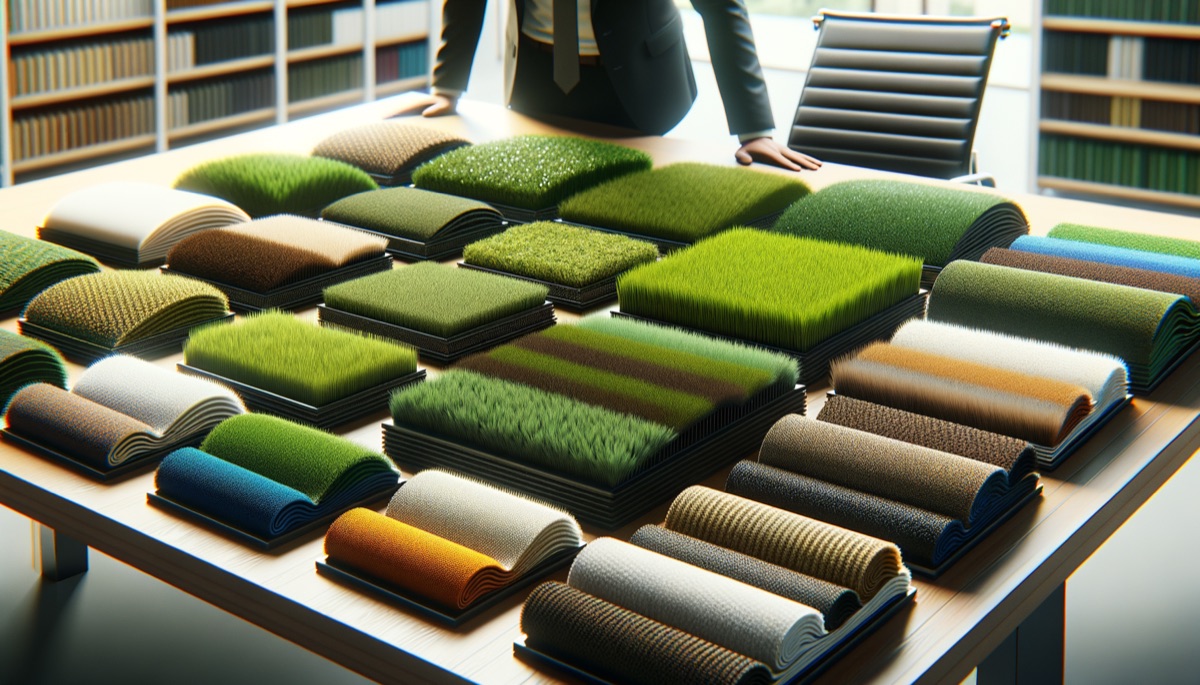
Artificial turf is not a one-size-fits-all product. Different applications require different specifications. Here are the main categories you will encounter when shopping for turf.
Landscape and Residential Turf
Pile Height
1.5 to 2.25 inches
Primary Fiber
Polyethylene
The most common type of artificial turf installed in residential settings. Designed to replicate the look and feel of a well-maintained natural lawn. Features multi-toned green blades with tan or brown thatch fibers that mimic the dead grass layer found in real lawns. Used for front and back yards, side yards, pool surrounds, rooftop decks, and general outdoor living spaces. Quality landscape turf prioritizes visual realism, softness, and UV resistance.
Pet Turf
Pile Height
1 to 1.5 inches
Key Feature
Enhanced drainage and antimicrobial backing
Engineered specifically for homes with dogs and other pets. Pet turf features shorter pile heights for easier cleaning, enhanced drainage systems that move liquid through faster (typically 30 or more inches per hour), antimicrobial backing or infill to inhibit bacterial growth, and durable fibers that resist the wear from claws and digging. Many pet turf products also include odor-neutralizing infill options like zeolite or proprietary antimicrobial treatments. This is the turf type that benefits most from regular professional cleaning.
Sports Turf
Pile Height
1.5 to 2.5 inches
Primary Fiber
Nylon or PE/Nylon blend
Built for athletic performance and player safety. Sports turf uses highly resilient fibers, usually nylon or nylon-polyethylene blends, that withstand intense foot traffic, cleated shoes, and equipment. The infill system, typically a combination of crumb rubber and silica sand, provides shock absorption and consistent ball bounce and roll characteristics. Used for football fields, soccer pitches, baseball infields, lacrosse fields, and multi-sport complexes. Professional sports turf requires the most rigorous maintenance schedule of any turf type.
Putting Green Turf
Pile Height
0.5 to 0.75 inches
Primary Fiber
Polypropylene or Nylon
Specialty turf designed to replicate the surface of a golf green. Features very short, dense fibers that provide a true ball roll at speeds comparable to real bentgrass or bermudagrass greens. Putting green turf is typically made from polypropylene or nylon and installed with little to no infill to maintain a consistent, fast surface. Available in different speed ratings to match your preference, from practice-level to tournament-speed. Popular for backyard putting greens, indoor golf simulators, and commercial entertainment venues.
Playground Turf
Pile Height
1.5 to 2 inches
Key Feature
ASTM F1292 fall attenuation certified
Safety-rated turf designed for playgrounds, daycare facilities, and children's play areas. Playground turf systems include a shock-absorbing pad underneath the turf surface that meets ASTM F1292 and ASTM F1951 safety standards for fall height attenuation and wheelchair accessibility. The fibers are soft, lead-free, and non-abrasive to minimize scrapes and friction burns. Available in natural green as well as bright colors for creative designs. Requires regular cleaning and inspection to maintain its safety certifications.
Popular Artificial Turf Brands
The artificial turf market includes dozens of manufacturers, but a handful of brands have established themselves as industry leaders through consistent quality, strong warranties, and widespread availability. Here is a look at the most recognized names.
SYNLawn
One of the largest and most recognized artificial turf brands in North America. SYNLawn is known for its commitment to sustainability, using plant-based polymers (soy-based polyurethane backing) in several product lines. They offer a wide range of landscape, pet, playground, and putting green products with USDA-certified bio-based content. SYNLawn operates through a network of authorized dealers and installers across the US, making it one of the most accessible premium brands. Their products typically carry warranties of 8 to 15 years depending on the product line.
ForeverLawn
A franchise-based artificial turf company with locations throughout the United States. ForeverLawn stands out for its local dealer model, which means you work with a locally owned business backed by national resources and quality standards. They offer residential, commercial, pet, playground, and sports products. ForeverLawn's DuPont ForeverLawn Select products use DuPont fiber technology. Their franchise model provides strong local support for installation and maintenance guidance.
FieldTurf
The dominant name in sports and athletic turf. FieldTurf, owned by Tarkett Sports, has installed surfaces in more professional sports venues than any other brand, including NFL stadiums, Major League Soccer fields, and hundreds of college and high school facilities. Their Revolution and Core product lines set the standard for athletic performance turf. While primarily known for sports applications, FieldTurf also offers landscape products. If you are looking at turf for an athletic field or multi-sport facility, FieldTurf is the benchmark.
Shaw Sports Turf
A division of Shaw Industries, one of the world's largest flooring manufacturers. Shaw Sports Turf brings massive manufacturing resources and quality control to the artificial turf market. They are a major player in sports turf for colleges, high schools, and recreational facilities. Shaw's Stria and B1K product lines are well-regarded for durability and consistent performance. Their backing by Shaw Industries provides strong warranty support and manufacturing consistency that smaller brands cannot match.
Bella Turf
A Canadian manufacturer that has gained significant market share in both Canada and the United States. Bella Turf focuses primarily on residential and commercial landscape applications, with an emphasis on realistic appearance and soft feel. They offer a curated product line rather than an overwhelming number of options, which simplifies the selection process for homeowners. Bella Turf products are known for their multi-tonal color blending and quality thatch layers. Their TrueGrass line is particularly popular for front yard installations where curb appeal is the top priority.
Global Syn-Turf
One of the largest direct-to-consumer artificial turf suppliers in the United States. Global Syn-Turf manufactures and sells a wide range of residential, commercial, pet, and sports turf products at competitive price points. They sell directly to homeowners, contractors, and landscapers, which often results in lower per-square-foot costs compared to franchise or dealer models. Their product catalog is extensive, with options at nearly every price point. Global Syn-Turf is a strong option for budget-conscious projects that still want quality materials and reasonable warranties.
Artificial Turf vs Natural Grass
The decision between artificial turf and natural grass comes down to your priorities, budget timeline, and how you plan to use the space. Here is an honest comparison across the factors that matter most.
| Factor | Artificial Turf | Natural Grass |
|---|---|---|
| Upfront Cost | $8 to $14 per sq ft installed | $1 to $3 per sq ft (sod) |
| Annual Maintenance Cost | $200 to $600 (professional cleaning) | $1,200 to $3,600 (mowing, water, fertilizer, pest control) |
| Water Usage | Near zero (occasional rinse) | 30,000 to 60,000 gallons per year for a typical lawn |
| Lifespan | 15 to 25 years | Indefinite with ongoing care |
| Appearance | Consistent year-round green | Seasonal variation, brown in drought or winter |
| Weekly Time Investment | 0 to 15 minutes | 2 to 5 hours (mowing, edging, watering) |
| Heat Retention | Gets hot in direct sun (140 to 180 F) | Stays cool through evapotranspiration |
| Environmental Impact | No pesticides, no water, but plastic-based product | Absorbs CO2, supports insects, but uses chemicals and water |
| Pet Friendliness | No mud, no dead spots, easy cleanup | Muddy paws, brown urine spots, digging damage |
| Break-Even Point | Typically 5 to 8 years | Lower upfront but higher ongoing costs |
The bottom line: artificial turf has a higher upfront cost but lower long-term expense. Most homeowners reach the break-even point within 5 to 8 years when factoring in water savings, lawn care elimination, and time saved. In water-restricted areas like parts of Arizona, California, Nevada, and Florida, the calculus tilts even further in turf's favor. For a detailed cost breakdown, see our Turf Cleaning Cost Guide.
How Long Does Artificial Turf Last?
The standard answer is 15 to 25 years, but the actual lifespan of your artificial turf depends heavily on the quality of the product, the quality of the installation, and, most critically, how well it is maintained.
Average Lifespan by Application
- Residential landscape turf: 15 to 25 years with proper care
- Pet turf: 10 to 15 years (higher wear from urine acidity and claws)
- Sports and athletic turf: 8 to 12 years under heavy use
- Putting greens: 15 to 20 years
- Playground turf: 10 to 15 years
Factors That Shorten Turf Lifespan
Neglected Maintenance
The number one lifespan killer. Turf that is never cleaned accumulates compacted debris that degrades the backing, clogs drainage, and breaks down fibers prematurely. Neglected turf can fail in as little as 5 to 8 years, less than half its potential lifespan. Regular professional cleaning is the single most impactful thing you can do to extend turf life.
Poor Installation
Inadequate base preparation, improper drainage, loose seams, and insufficient edging all lead to premature problems. Water pooling under the turf accelerates backing degradation. Poorly compacted base material shifts and settles, creating uneven surfaces and wrinkles. Always hire a certified installer with verifiable references.
Extreme UV Exposure
While modern turf is UV-stabilized, prolonged exposure to intense sunlight in desert climates like Arizona and Nevada still causes gradual fiber degradation over time. Reflected heat from windows, metal surfaces, or concrete can create concentrated hot spots that melt or warp turf fibers. Window film or strategic shading can mitigate this risk.
Harsh Chemical Exposure
Using bleach, acetone, or other harsh solvents to clean turf damages the fiber structure and degrades the backing material. Even some common household cleaners can cause discoloration or brittleness over time. Always use turf-safe cleaning products or hire professionals who understand which products are compatible with synthetic grass.
Factors That Extend Turf Lifespan
- Regular professional cleaning every 6 to 12 months removes embedded contaminants and redistributes infill
- Proper infill replenishment maintains fiber support, drainage, and cushioning as infill settles or washes out over time
- Cross-brushing fibers monthly prevents permanent matting and keeps blades standing upright
- Prompt stain and spill treatment prevents permanent discoloration and chemical damage to fibers
- Quality initial installation with proper base, drainage, and seaming prevents structural problems down the road
Cost of Artificial Turf
The total installed cost of artificial turf ranges from $8 to $14 per square foot for most residential projects. That price includes materials, base preparation, installation labor, and infill. Here is how those costs break down.
| Component | Cost per Sq Ft | Notes |
|---|---|---|
| Turf Material | $2.50 to $5.50 | Varies by fiber type, density, and brand |
| Base Preparation | $2 to $4 | Excavation, grading, compacted aggregate |
| Installation Labor | $2 to $3 | Laying, seaming, securing, trimming |
| Infill Material | $0.50 to $1.50 | Silica sand, crumb rubber, or organic options |
| Weed Barrier | $0.25 to $0.50 | Geotextile fabric under the base |
| Edging and Borders | $0.50 to $1 | Bender board, nailer strips, or concrete |
| Total Installed | $8 to $14 | Average residential project |
Real-World Example
A typical 1,000-square-foot backyard installation with mid-range polyethylene turf, proper base preparation, and silica sand infill will cost approximately $8,000 to $12,000 all-in. A premium installation with top-tier turf, organic infill, and complex landscaping features could reach $14,000 or more. For very small projects under 500 square feet, the per-square-foot cost tends to be higher due to fixed setup and labor minimums.
Keep in mind that the installation cost is only part of the total cost of ownership. Factor in ongoing maintenance costs of $200 to $600 per year for professional cleaning, as well as the savings you will realize from eliminating water bills, lawn care services, fertilizer, and pesticide costs.
For a detailed breakdown of cleaning and maintenance costs specifically, visit our Turf Cleaning Cost Guide.
Why Maintenance Matters
This is the section most turf owners wish they had read before their first year of ownership. Artificial turf is marketed as "low maintenance," and compared to a natural lawn, that is accurate. But low maintenance does not mean no maintenance. Neglecting your turf does not just make it look bad. It actively shortens its lifespan, voids your warranty, and creates health risks.
Extends Lifespan by Years
Well-maintained turf routinely lasts 20 to 25 years. Neglected turf often fails within 5 to 8 years. That difference represents thousands of dollars in premature replacement costs. Regular cleaning removes the organic debris, bacteria, and compacted particles that degrade backing material and break down fibers. Think of maintenance as insurance on your investment. The cost of an annual professional cleaning is a fraction of the cost of early replacement.
Protects Your Warranty
Most turf manufacturers require regular maintenance as a condition of their warranty. If you file a warranty claim for premature fiber failure, discoloration, or backing degradation, the manufacturer will ask about your maintenance history. Without documentation of regular cleaning and care, warranty claims are routinely denied. Professional cleaning receipts serve as proof that you upheld your end of the warranty agreement.
Prevents Bacterial Growth
Artificial turf, especially pet turf, accumulates bacteria, mold, and allergens over time. Warm, moist conditions accelerate this growth. Without professional-grade sanitizing, these contaminants build up to levels that can cause odors, skin irritation, and respiratory issues for both humans and pets. This is particularly concerning for families with young children who play on the turf. Learn more in our Maintenance Guide.
Preserves Appearance and Performance
Without regular grooming, turf fibers mat down in traffic patterns and lose their upright position permanently. Infill migrates to low areas, leaving some sections bare and others oversaturated. Organic stains from leaves and tree sap discolor the fibers. Regular cross-brushing, infill redistribution, and professional cleaning keep your turf looking and performing like it did the day it was installed.
Maintains Proper Drainage
Over time, fine particles, decomposed organic matter, and compacted infill can clog the drainage perforations in your turf's backing. When drainage slows, water pools on the surface, creating a breeding ground for bacteria and accelerating backing degradation. Professional cleaning restores drainage capacity by decompacting infill and clearing drainage pathways. Learn about how often to schedule cleaning and whether DIY or professional cleaning is the right approach for your situation.
The Real Cost of Skipping Maintenance
With Regular Maintenance
- Turf lasts 20 to 25 years
- Warranty stays valid
- Safe for kids and pets
- Looks great year-round
Without Maintenance
- Fails in 5 to 8 years
- Warranty voided
- Bacteria and odor buildup
- Premature replacement ($8,000+)
Frequently Asked Questions
Yes, modern artificial turf is designed with safety in mind. Lead-free materials, non-toxic infill options like organic coconut or cork, and antimicrobial treatments make today's turf safe for children and pets. Many playground-grade products also meet ASTM F1292 fall height attenuation standards. The key is selecting a quality product from a reputable manufacturer and maintaining it properly. Regular cleaning removes bacteria and allergens that can accumulate on any outdoor surface, natural or synthetic.
Artificial turf can get significantly hotter than natural grass in direct sunlight, sometimes reaching 140 to 180 degrees Fahrenheit on peak summer days. However, several solutions exist. Lighter-colored turf reflects more heat. Infill options like TurFill and ZeoFill stay cooler than traditional crumb rubber. Shade structures, misting systems, and simply hosing down the turf with water before use can reduce surface temperature by 30 to 50 degrees almost instantly. Many modern turf products also incorporate heat-reflective technology in the fiber design.
It is not recommended to install artificial turf directly over existing grass. The organic material underneath will decompose, creating uneven surfaces, drainage problems, and potential mold growth. Proper installation requires removing existing vegetation, excavating 3 to 4 inches of soil, installing a compacted aggregate base, laying a weed barrier, and then placing the turf on top. Cutting corners on preparation is the most common reason for premature turf failure and costly repairs.
Basic maintenance involves removing debris with a leaf blower or rake, rinsing with a garden hose, and cross-brushing fibers monthly. For pet areas, rinse urine spots promptly and pick up solid waste daily. For deeper cleaning, professional services use commercial-grade equipment to sanitize, deodorize, and groom the turf, reaching contaminants that household methods cannot address. Professional cleaning every 6 to 12 months is recommended for residential turf, and more frequently for pet turf or high-traffic areas. Visit our maintenance guide for a complete breakdown.
When artificial turf reaches the end of its useful life after 15 to 25 years, it needs to be removed and replaced. Some components can be recycled. The polyethylene and polypropylene fibers can be processed into plastic lumber, automotive parts, and other recycled products. The rubber infill can be repurposed. Several manufacturers now offer take-back programs, and specialized turf recycling facilities are growing across the country. While recycling infrastructure is still developing, the industry is making significant progress toward more sustainable end-of-life solutions.