How to Clean Artificial Turf After a Party or Event
Hosting a barbecue, birthday party, or outdoor event on your artificial turf is one of its best features. The cleanup afterward does not have to be stressful. Here is a step-by-step plan for tackling every type of mess, from spilled drinks to sticky gum.
First Steps: Debris Removal
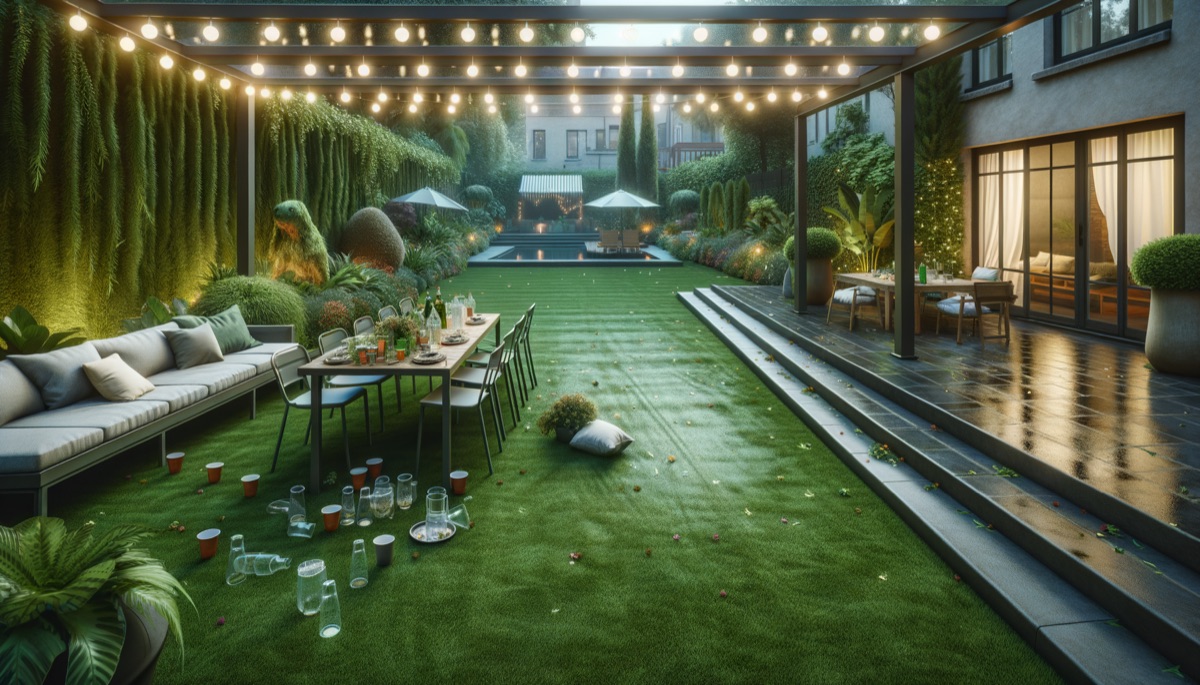
Before tackling individual stains, start by clearing all solid debris from the turf surface. This prevents small items from getting pushed into the infill during cleaning and makes stain treatment more effective.
Debris Removal Checklist
- 1. Pick up large items by hand. Plates, cups, napkins, food scraps, bottle caps, and any other solid waste should be removed first.
- 2. Use a leaf blower on low. A leaf blower on a low setting is the fastest way to clear small debris like crumbs, confetti, flower petals, and dirt without disturbing the infill.
- 3. Use a plastic rake for stubborn items. Gently rake any debris that is caught in the turf fibers. Never use a metal rake, as it can tear fibers and damage the turf backing.
- 4. Inspect the perimeter. Check along edges, borders, and any seams where debris tends to accumulate.
This initial sweep should take 15 to 20 minutes for a typical backyard. Once the surface is clear, you can identify and target specific stains and problem areas.
Cleaning Food and Drink Spills
Different spills require different approaches. Here is how to handle the most common party messes:
Sugary Drinks (Soda, Juice, Cocktails)
Sugar creates a sticky residue that attracts insects and traps dirt. Rinse the area immediately with warm water. If the spill has dried, apply a solution of one tablespoon mild dish soap per gallon of warm water, scrub gently with a soft brush, and rinse thoroughly. Repeat if stickiness remains.
Red Wine and Dark-Colored Beverages
Blot the spill with a clean cloth immediately. Do not rub, as this spreads the stain. Mix one tablespoon of dish soap with one cup of warm water and apply to the stain with a cloth. For stubborn red stains, a small amount of 3 percent hydrogen peroxide can be applied, left for 5 minutes, and rinsed. Test on a hidden area first to ensure it does not lighten the turf color.
Ketchup, Mustard, and Sauce Stains
Scoop up as much of the solid material as possible with a spoon or dull knife. Apply a mild dish soap solution and let it sit for 5 minutes. Scrub gently with a soft-bristled brush in the direction of the turf fibers and rinse. Mustard stains contain turmeric, which is a strong dye, so prompt treatment is important.
Chocolate and Ice Cream
If melted, blot up the excess first. If the chocolate has hardened, let it freeze completely (early morning cleanup works well for this) and then break off the solid pieces. Clean any remaining residue with warm soapy water and a soft brush.
Gum Removal
Chewing gum on artificial turf is one of the more frustrating cleanup challenges, but it is manageable with the right approach.
Step-by-Step Gum Removal
- 1. Freeze the gum. Place ice cubes in a plastic bag and hold it against the gum for 5 to 10 minutes until the gum hardens completely.
- 2. Break and peel. Once frozen, the gum becomes brittle. Use a dull knife or plastic scraper to carefully pry it off the turf fibers.
- 3. Clean the residue. Apply a small amount of mineral spirits or a citrus-based adhesive remover to a cloth and dab at any remaining gum residue. Do not pour solvents directly on the turf.
- 4. Rinse the area. Flush with water to remove any cleaning product residue from the fibers and infill.
Never try to pull warm, soft gum off the turf. It will stretch and spread across more fibers, making removal much harder. Always freeze first.
Grease and Oil Stains
Barbecue grease, cooking oil, and salad dressing drips are common at outdoor parties. Grease is hydrophobic, meaning water alone will not remove it. You need a degreasing agent.
Grease Stain Removal Process
- 1. Absorb excess grease. Sprinkle baking soda, cornstarch, or cat litter over the grease spot to absorb the oil. Let it sit for 15 to 20 minutes.
- 2. Sweep up the absorbent. Use a soft broom to remove the powder and absorbed grease.
- 3. Apply a degreasing solution. Mix two tablespoons of grease-cutting dish soap (like Dawn) with a gallon of warm water. Apply directly to the stain.
- 4. Scrub gently. Use a soft-bristled brush to work the solution into the stained fibers. Let it sit for 10 minutes.
- 5. Rinse thoroughly. Flush with a hose to wash away all soap and dissolved grease.
- 6. Repeat if needed. Heavy grease stains may require two or three treatment cycles.
For large grease spills from a barbecue accident, professional stain removal may be the most effective option, as grease that soaks into the infill layer is difficult to remove with household methods alone.
Tough Stains After Your Event?
Get matched with a verified local turf cleaning professional for post-event cleanup. Free quotes, no obligation.
Get a Free QuoteGeneral Rinse and Refresh
After addressing individual stains, give the entire turf area a thorough rinse and brush to restore it to pre-party condition.
Full Turf Refresh Steps
- 1. Rinse the entire area. Use a garden hose with a spray nozzle to flush the full surface. Start from one end and work systematically to the other, spending extra time on high-traffic zones.
- 2. Cross-brush the fibers. Use a stiff nylon-bristled broom to brush the turf against the grain. This lifts flattened fibers from foot traffic and redistributes any displaced infill.
- 3. Check for missed spots. Walk the entire area slowly and look for any remaining stains, sticky patches, or debris.
- 4. Allow to dry. Let the turf air dry completely before allowing regular use. This usually takes 1 to 2 hours in warm weather.
When to Schedule Professional Post-Event Cleaning
Not every party requires professional cleanup, but certain situations make it the smart choice:
- Large gatherings (30+ guests). Higher foot traffic compacts more infill and creates more spills than typical maintenance can handle.
- Events with alcohol service. Beer, wine, and cocktail spills across a large area leave sticky, odor-producing residue throughout the infill.
- Catered events with hot food. Professional grills, fryers, and serving stations create concentrated grease zones that require commercial degreasing.
- Events on rental properties. If you manage a rental or event venue with artificial turf, professional cleaning between events protects your investment and ensures a clean surface for the next guests.
- Stains that resist DIY treatment. If you have tried the methods above and stains remain, professional turf cleaning has access to commercial-grade products and techniques that resolve stubborn issues.
Professional post-event turf cleaning typically costs $150 to $400 depending on the area size and severity of the mess. Most providers can schedule within 24 to 48 hours of the event.
Prevention Tips for Future Events
A little preparation before your next event makes cleanup significantly easier:
- Use drip trays under the grill. Place aluminum drip pans or a grill mat under and around the barbecue to catch grease before it reaches the turf.
- Set up designated eating areas. Place tables and seating on a patio or deck where possible, keeping the heaviest food and drink traffic off the turf.
- Provide ample trash receptacles. More trash cans placed around the event area means less debris ending up on the turf.
- Ban glass on the turf. Broken glass is extremely difficult to remove from infill. Use plastic or aluminum drinkware for outdoor areas.
- Address spills immediately. Keep a bucket of soapy water and a few rags accessible during the event so spills can be blotted quickly.
- Lay down protective mats. For high-traffic serving areas, place artificial grass-friendly mats or rugs that can be removed after the event.
Frequently Asked Questions
Will food coloring permanently stain artificial turf?
Food coloring and dye-heavy drinks like red wine, fruit punch, and sports drinks can temporarily stain turf fibers, but they rarely cause permanent discoloration if addressed within 24 to 48 hours. Blot the spill with a damp cloth to remove the bulk, then apply a mild dish soap and warm water solution. For stubborn food coloring stains, a 3 percent hydrogen peroxide solution can be carefully applied to the stain and rinsed after 5 minutes. Avoid rubbing aggressively, as this can push the dye deeper into the fiber structure.
How do I get the smell of beer or alcohol off artificial turf?
Alcohol spills create a sticky residue that attracts dirt and produces a sour odor as sugars ferment. The best approach is to rinse the area thoroughly with warm water immediately after the event. For lingering odor, mix one tablespoon of mild dish soap per gallon of warm water and scrub the area with a soft-bristled brush, then rinse. If the smell persists after cleaning, an enzyme-based cleaner will break down the organic residue causing the odor. Avoid using hot water on beer spills, as heat can set the sugars into the fibers.
Can I use a pressure washer to clean artificial turf after an event?
A pressure washer can be used on artificial turf but only with extreme caution. Keep the pressure below 1,500 PSI, use a wide fan spray nozzle of at least 25 degrees, and maintain a distance of at least 12 inches from the turf surface. Higher pressure settings can displace infill, damage turf fibers, and even separate seams. For most post-party cleanup, a standard garden hose with a spray nozzle provides sufficient pressure without the risk of turf damage.
How soon after a party should I clean the artificial turf?
Clean as soon as possible, ideally within a few hours of the event ending. The longer spills, food residue, and debris sit on the turf, the harder they are to remove. Sugary drinks begin attracting insects within hours. Grease stains set deeper into fibers over time. Organic matter like food scraps can begin to decompose and attract mold within 24 to 48 hours in warm weather. At minimum, do a quick debris removal and rinse the night of the event, then perform a thorough cleaning the next morning.
Should I hire a professional to clean my turf after a large event?
For casual backyard gatherings, DIY cleanup is usually sufficient. For larger events with 30 or more guests, catered food, or events involving alcohol, professional post-event cleaning is worth the investment. Professionals have the equipment to flush food and drink residue from the infill layer, remove stubborn stains, and sanitize the turf in a single visit. Most professional post-event cleanings cost between $150 and $400 depending on the area size and condition, which is far less than repairing turf damage caused by neglected cleanup.
The Bottom Line
Post-party turf cleanup follows a simple sequence: remove debris first, treat individual stains second, and finish with a full rinse and brush. The most important factor is timing. Cleaning within a few hours of the event prevents most stains from setting and keeps sugary residue from attracting insects or growing mold.
For small gatherings, 30 to 45 minutes of cleanup is usually all it takes. For larger events, budget an hour or two, or schedule a professional cleaning to ensure nothing is missed. Your turf is designed to handle outdoor living. With proper post-event care, it will look fresh and ready for the next gathering.